Rick Denton (00:21)
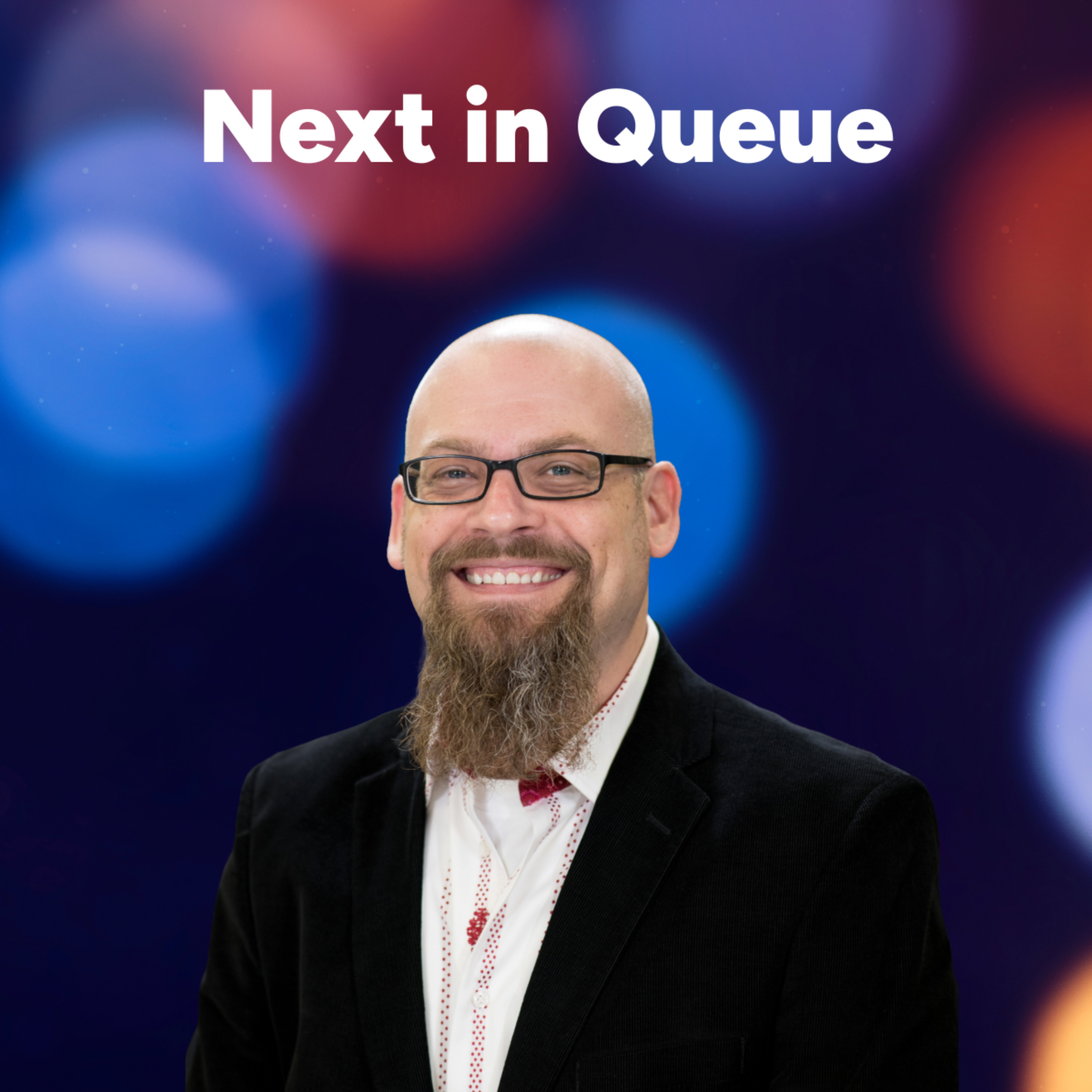
CX Passport listeners, today's guest is Kari Thor-Runnarsson. And we get another first today, our first guest from Iceland. Kari focused on customer service and service quality for pretty much his entire career, even back when he started out in marketing. He earned his master's in marketing in the UK, but always looked at it through a customer lens. Not campaigns first, but experience first.
Most of his career has rested squarely in B2B, business to business, including a lot of startup work. And that's pushed him to question some of the assumptions we all tend to borrow from B2C business customer. Tech heavy thinking, borrowed metrics, even how we define loyalty and value in long-term relationships, Kari's developed a framework specifically for B2B companies. Well, it doesn't look like anything coming out of Silicon Valley SaaS.
He's worked across global markets, including time in Berlin, and that brings a perspective that challenges the idea that one CX Playbook fits everyone or every industry. Kari, welcome to CX Passport.
Kári Thor (01:26)
Thank you so much for having me and happy new year.
Rick Denton (01:28)
Yeah.
Happy New Year to you as well. We get to say that for a few more days, I think we're recording this in that kind of first business week back at it. And you and I were talking before we hit record on a well holidays are a little different when you're running your own business. And so here you and I are back at it. You you started your career in marketing. I mentioned that in the introduction and you've always talked about seeing the work from the customer's point of view. How do you think about blending marketing?
and customer experience, especially in a B2B environment.
Kári Thor (02:02)
I want to differentiate between B2C and B2B just in general, but there are some things that are ⁓ similar to both ⁓ sort of approaches, and that's that at the end, you're trying to ⁓ meet needs and solve a problem that the customer has, whether that's B2B or B2C. ⁓
that was sort of just always my approach in marketing. And when I was studying marketing, and then my first marketing jobs, was at telecom companies and banks is sort of understanding, you know, that the customer experience is what determines if they're going to be long term loyal customers, or if they're going to be dissatisfied and then search for something else, which then obviously has a detrimental effect on the ⁓
on the profitability and outcome of the company. So approaching everything from just the customer journey and all that is paramount to marketing. And honestly, the boundaries between marketing and CX are very fluid, I think.
Rick Denton (02:49)
Yeah.
I use that word too, fluid. I like that. if we could, let's talk about that just for a second, because there has been a historical tribalism, I feel like a lot in marketing. I'm a marketer or I'm a customer experience person. You chose to blend those two worlds together, even back at the beginning. How did you recognize that the tribalism of those is not the most valuable way to approach
Kári Thor (03:09)
Yeah.
Rick Denton (03:30)
a customer and ultimately the business results that you're describing.
Kári Thor (03:35)
Yeah, unfortunately, this sort of tribalism is found in many other areas. So you have ⁓ it between B2B and B2C. You have it between product and marketing and even in marketing and CXO. ⁓ Like I said, it's just sort of always from the very beginning just sort of seeing the experience of a customer
Rick Denton (03:41)
You
Mm-hmm.
Kári Thor (03:58)
I mean, just realized that when I started out, it wasn't even called CX. wasn't anything called CX. So there was no sort of friction between that. So that's sort of just naturally was my mindset going into marketing is that we're doing it to meet the expectations and the needs and the wants of the customer. And that travels throughout the whole journey.
Rick Denton (04:05)
That's right.
I like that because it shows that from the very beginning, labels were irrelevant. It was more just, hey, customer has needs, has desires. If business fills needs and fills those desires, business results will come about.
while we don't wanna over-separate the two worlds, there is a distinct difference between those. Your career has been extensively, exclusively B2B. So for folks who've spent more time in B2C, what's really different about the B2B customer experience that they, well, tend to underestimate or maybe just misunderstand?
Kári Thor (04:55)
Well, by definition, it's just a more simpler transaction. It's a more simpler relationship. ⁓ Whether that's of ⁓ deciding on who to buy from and who to repurchase from is typically done within your own ⁓ cognition of the experience. Whereas if it's a B2B, then you typically have to go through a
Rick Denton (05:14)
Mm-hmm.
Kári Thor (05:21)
⁓ multiple stakeholders who each have their own ⁓ expectations and objectives with the business relationship. And you somehow have to find ⁓ what vendor best serves the collection of the group that's involved. So it's just a much more complicated experience. One funny story. ⁓
Rick Denton (05:23)
Mm-hmm.
Mm.
Kári Thor (05:46)
during my lunch break today, I went out and I returned a router that I had been sitting in my office for three or four months unused. And I'm always on the way to return it. Finally went out there and I returned it and I explained, and I had actually explained in an email before that I hadn't used the data and the router for three or four months. Finally returned it and I'm signing the release form or whatever. And it says that
Rick Denton (05:57)
Mm-hmm.
Mm-hmm.
Kári Thor (06:16)
the service will be canceled on the 31st of January. I say, there's no way to change this. I haven't used this for three or four months. I've been paying for three or four months for data that I haven't been using. And said, no, there's nothing we can do about it. And I'm like, I've been satisfied with this telecoms company for the time that I've been using it. But it only takes one little thing that solidifies this relationship into completely transactional.
There's nothing that they're doing to think about my needs or my situation. ⁓ Just these sort of things that are blatant and without taking into account the customer side is something that I see a lot in business and maybe even more business to business.
Rick Denton (06:49)
Mm-hmm. Mm-hmm.
Kári Thor (07:08)
Because there are, of course, bigger amounts at stake. But at the same time, ⁓ something like this can completely ⁓ reframe my view and satisfaction towards the vendor.
Rick Denton (07:48)
And I mean, we talk about B2C and B2B have that relationship element to it. You're describing that, that, that peak end rule, that the last moment that you had with them is really kind of breaking your relationship with that company. And that exists in the B2B and B2C world. Do you see in B2B that because of the nature that oftentimes they are, they can be, let's say that they can be longer term relationships or even more interwoven relationships.
Kári Thor (07:50)
you
Mm-hmm.
Rick Denton (08:18)
that there's a stickiness that sometimes that peak end rule doesn't affect as strongly, or maybe it's just that the B2B customer is like, I can't do anything about it. Are you seeing differences there?
Kári Thor (08:32)
Yeah, I mean, you are often bound by a contract, for instance. So often what happens is that companies that start sort of their dissatisfaction starts increasing with the key stakeholders. They'll stop responding to emails. They'll stop answering surveys. They'll sort of hold back and just go quiet. And that's also really important.
Rick Denton (08:35)
Mm-hmm.
Mm-hmm.
Kári Thor (08:58)
thing to keep in mind that the ones that are quiet are often the ones that are most at risk of churning. ⁓ So yeah, so mean, it's... ⁓
If I'm just making a decision for myself, can internalize and typically there's less at risk ⁓ when it's a B2C relationship. For B2B, like I said, it only needs one instance that breaks the camel's back ⁓ and start a negative connotation with that company ⁓ because...
Rick Denton (09:18)
Mm-hmm.
Yeah.
Kári Thor (09:34)
If they're not reaching out regularly to sort of see how your experience is and where your needs and expectations are at this time, because they can change. They can be completely different when you signed up a year ago. If they're not continually monitoring just your experience, then things can drift apart. that means that the contracts are at risk when they come up for renewal.
Rick Denton (09:46)
Mm-hmm. Right.
You know, I chuckle because absolutely I've done that actually the other way, right? As a customer, I'm in a B2B relationship where I've been like, you know what? I'm done with this company. I'm actually dealing with it right now. I won't mention brands, but basically I've bailed on them. I can't get out of the relationship. I can't change the contract, but I've completely bailed on them. If they recognized my silence as a customer, as a flag that they're about to lose me at renewal, something could change, but they're not listening in that way.
The ghosting of a customer is a pretty important B2B signal there.
Kári Thor (10:29)
Yeah. Especially
if there's a signal beforehand that sort of tells you a sign, sort of gives you a reason for the signal, for the quiet.
Rick Denton (10:34)
Yes.
Ooh, you just described my scenario. I hate to be so vague here. I can't talk about it, but absolutely. I will be firing this company when the renewal comes up in May. Cari, one of the differences in the B2B world is there can be the customer, the B2B customer often is having to not necessarily represent their needs and wishes, but they're representing the needs and wishes of the business.
Kári Thor (10:43)
Yeah. Yeah.
Rick Denton (11:05)
Have you seen that be somewhat disruptive or challenging when it comes to the business trying to understand the customer when the human that's the customer isn't necessarily the customer? That may be the clunkiest way of ask that, but that human isn't necessarily representing their wishes and desires. They're representing the company's wishes and desires.
Kári Thor (11:28)
Yeah, like I said, it's often a or ⁓ a collection of needs and desires and objectives that ⁓ are different. So I often take the example of a CFO may have one objective ⁓ with ⁓ purchasing a service from company, whereas the ⁓ CEO might have different. ⁓
Rick Denton (11:30)
Yeah.
Kári Thor (11:53)
There might be different metrics attached to their objectives and to their expectations. So if a company, the vendor, isn't aware of what they're using to measure the success of the company, ⁓ they're going to have a hard time fulfilling those expectations. So ⁓ at the end of the day, it's about communication. about being in, ⁓ it's about creating the relationship ⁓ as you would a personal relationship. ⁓
Rick Denton (11:53)
Yeah.
Yeah.
Kári Thor (12:22)
You know, you talk to your spouse, you don't send them surveys, you don't ask them a zero to 10 point scale question. I haven't yet, maybe that's where I'm going wrong. My point is that you need more depth in the relationship, you need more depth in understanding the expectations.
Rick Denton (12:33)
Wait, you don't? It's a quarterly exercise in my household. No, it is not.
Yeah.
Kári Thor (12:50)
using technology today, companies can easily achieve that. But where they usually go wrong is that they don't treat the time that the customer ⁓ sacrifices to give the feedback. They don't treat it with respect. So what we see a lot the silence that companies show customers when they, when they ask
Rick Denton (13:03)
Yeah.
Kári Thor (13:10)
for feedback or they ask about their experience is something you're just treating your customer and saying that we don't really respect the time that you're taking to give us feedback or to contact us ⁓ if they never hear back from you. And so they start going silent instead of voicing their opinion and giving you a chance to rectify whatever it was that went wrong.
Rick Denton (13:11)
⁓
Sorry, we are thousands of miles apart from each other. Different countries, different weather patterns, different all that, and yet you are truly describing the scenario that I am dealing with my B2B situation right now. They ghosted my response as well. I'm with you. No.
Kári Thor (13:48)
And you know what? It's not unique. That's the thing. This happens everywhere, no
matter what country or culture.
Rick Denton (13:54)
It's just
comical. It's like you're narrating the life of CX Passport right now. I want to switch and take a break. know, now I can kind of feel my blood pressure going up a little bit. So let's take a break from just B2B in general. You are the CX Passport's first guest from Iceland, which has me incredibly excited. You've also worked around the world. How have you seen expectations and the delivery of customer experience different Iceland versus other markets that you've worked in?
Kári Thor (14:24)
⁓ So I mean, my main experience comes from Europe ⁓ and the States where I grew up in the States. So I'm a little bit familiar with that. And I think, you know, whether it's CX or customer support, customer success, sorry, ⁓ which is the term that, by the way, is largely confined to tech industry. I'd love to see more customer success. ⁓
Rick Denton (14:28)
Mm-hmm.
Mm-hmm.
Kári Thor (14:51)
⁓ sort of frameworks and non-tech companies. ⁓ But I think the states lead the world when it comes to sort of ⁓ this discipline of customer experience and marketing. ⁓ I studied in the UK because they also have a very long history of marketing and actually the university that I studied was the first university in the world to create a professorship for marketing. ⁓
Rick Denton (15:06)
Hmm.
Kári Thor (15:20)
But yeah, I think the United States leads the sort of CX game when it comes to sophistication and maturity. And in Europe, it's sort of the more north you are, think it's more mature and as you go south, I spend a lot of time in Spain as well. I don't think CX is really in the vocabulary. Things are very chill still when it comes to both life and customer experience.
Rick Denton (15:36)
Mm-hmm.
Ha ha ha ha!
I love that, I love the idea of, and I love your kindness and the way you phrase it of things are chill when it comes to the world of customer experience.
the Denton family will be, God willing, heading to Spain later this year as well. So I look forward to seeing some of that chill lifestyle. Speaking of all this travel, it can be nice when you get access to the First Class Lounge. And that's what I'm offering you today. We're going to stop down here in the First Class Lounge. We'll move quickly here and have a little bit of fun. What is a dream travel location from your past?
Kári Thor (16:10)
Mm.
I'd love to go to like Southeast Asia, Thailand or heard a lot of great things. so, I'd probably I mean, I've traveled pretty extensively in Europe. So Thailand, Southeast Asia.
Rick Denton (16:31)
Mm-hmm.
Okay. So Thailand
and Southeast Asia is where you need to get to that you've not been to yet. What about your past? Where have you been that was a wonderful, your favorite place that you've been?
Kári Thor (16:52)
⁓ So definitely ⁓ our honeymoon, my wife's and I honeymoon. We did a road trip starting in Germany, drove to Austria and then went to Italy and Tuscany, spent some time in Tuscany and then went back north to the Alps and spent time ⁓ in the French Alps. It was amazing, just amazing time.
Rick Denton (16:58)
Huh.
my gosh.
But you just described...
Kári Thor (17:20)
And we had no plan, which
was the amazing thing. We had no plan. we just, ⁓ the day before we decided let's go to Tuscany or let's spend more time in Tuscany. And that day we ordered or we booked the hotel. So we never had, we only had the first and last night planned. Yeah.
Rick Denton (17:23)
⁓ my gosh.
WAAAA-
Wow. Wow. Well, you want to talk
about if someone were to describe a model for most romantic vacation style, I think your location, your approach, the honeymoon, all of that. What a brilliant. that's a fun trip. I can see why that was your favorite one from the past. Now you talked about Thailand and Southeast Asia as being places that you want to go in the future. And one of things I love about that region of world is the food. What is a favorite thing of yours to eat?
Kári Thor (18:04)
Anything with garlic. ⁓ So, know, garlic chicken, which they have in Southeast Asia or, yeah, noodles with garlic or, ⁓ yeah, love that.
Rick Denton (18:06)
Ha ha ha.
I love it. ⁓ that's great.
love it. I love the category of anything with garlic. That's awesome. Well, what about the other way? What is something? Now, see, I'm with you on garlic, but truffle loses me. know, truffle fries are very popular and I'm always the one going, can I get them regular? So, but I'm with you on garlic. Now, I mentioned truffle, something I'm not so keen on. What is something you were forced to eat growing up, but you hated as a kid?
Kári Thor (18:22)
Anything with garlic or truffle, I'm all for it.
⁓ You've been to Iceland, you've probably been exposed to the traditional foul food like fermented shark and fermented monkfish and sheep's testicles and sheep's head and all that good stuff. ⁓ I was never a fan, ⁓ especially because, like I said, I grew up in the States, so I sort of...
Rick Denton (18:52)
I had some really good traditional food. ⁓ yes. Yes. Yes. Yes. The fermented shark.
Okay.
Kári Thor (19:09)
missed those formative years when that sort of was used to form my palate. ⁓ So yeah, those sort of traditional old-fashioned foods, I'm not a fan of.
Rick Denton (19:18)
Okay,
well I can see that I did have the fermented shark. I did not have the sheet balls. So I guess I missed out on a category and it sounds like it was a good thing to miss out on it. Kari, sadly it is time for us to leave the lounge. What is one travel item, not including your phone, not including your passport that you will not leave home?
Kári Thor (19:28)
Yes.
Hmm. ⁓
Bye, EarPods.
can use that to help you with travel tips and podcasts and use it to show you around the city with all sorts of information about the city when you walk.
Rick Denton (20:07)
I like that. When you first answered AirPods, I was like, yeah, it's nice. You've got your music, you've got your shows, your whatever that is, but then take into that next level of the informative aspect. It's like you've got this sort of next level different perspective on it. And actually that's something that when we talked the first time that I caught, when you were talking about the industries that you focus on, you know, lot of B2B CX conversations are really about tech companies and SaaS.
but you've deliberately focused on other industries. Why was it important for you to go there instead?
Kári Thor (20:40)
Yeah, as I mentioned briefly, CS or customer success isn't a term that's widely used outside of tech. And I think the concept of customer success, i.e. having somebody within your company that knows the needs and expectations of your customers and helps them achieve ⁓ their objectives, ⁓ is something that I think is a wonderful idea.
Rick Denton (20:48)
Mm.
Kári Thor (21:06)
⁓ I'm on the side of that shouldn't be tied to revenue, but that's just me ⁓ and a later different conversation. ⁓ But sort of applying the frameworks of CS and sort of that methodology and it's another level of ⁓ customer experience that I think is lacking in many non-tech industries. So we have a lot of companies in the wholesale industry and shipping and logistics.
Rick Denton (21:11)
You
Mm-hmm.
Kári Thor (21:35)
⁓ and these sort of non-tech industries cleaning services. And ⁓ they're sort of starting to realize that the customer experience is the defining factor. You can't compete on price ⁓ in cleaning. Everybody's the same mops and everybody's using the same soaps. ⁓ It's the customer experience and sort of sentiment that it leaves behind that ⁓ determines if the customer is satisfied or not.
Rick Denton (21:52)
Ha ha ha ha.
Yeah, that's a perspective that a prior guest ⁓ on the show, Sarah Kennard shared as well that, and she was talking about from the AEC, architecture, electrical and construction, where look, an HVAC system is an HVAC system. And if it's installed right, it's installed right. And so it does come down to the experience side of it. Are you seeing that in, cause you mentioned price.
And a lot of the CX conversation is around, if you have an elevated experience, then you can have elevated price. And a lot of that is B2C, luxury goods, luxury experiences, luxury hospitality. You're kind of talking about the commoditization space. And so as an industry gets commoditized, how does experience play into a customer's choice on choosing company A versus company B?
Kári Thor (22:51)
Well, it's the defining choice. it's, if it's, because typically if it's a race to the bottom, with price, the margins aren't that great anyway. so it's not going to be like a huge saving. if somebody has either the experience or, or sort of the word of mouth that this, company, a just, you know, every time the cleaner comes to the office, ⁓ they leave, ⁓ flowers on the table or, or, you know, ⁓ just these little things that can make a real difference. And that's again, when you go sort of into marketing.
Rick Denton (22:58)
Mm-hmm.
Mm-hmm.
Kári Thor (23:21)
⁓
Rick Denton (23:21)
Mm.
Kári Thor (23:22)
the marketing aspect of it is just thinking what would leave a lasting impression with this client. It doesn't have to cost a lot of things. And lot of things in service don't cost anything. It's just a little bit better training and better management and a better understanding of the objectives that the customer is trying to achieve. ⁓ yeah, it's sort of...
Rick Denton (23:28)
Mm-hmm.
Kári Thor (23:45)
Doing things that leave a lasting impression and leave satisfaction, not like what you and I are experiencing with our vendors, which could easily be prevented.
Rick Denton (23:56)
Don't you, we sew when it just.
Yeah.
yeah. ⁓ man, we still want to name and shame here. We so do.
So we've been talking a lot about B2B and it is, we've got B2B companies, we've got B2B leaders, where a lot of them is they're saying, okay, you're right, it's time for us to focus on customer experience. Our industry is demanding that that's gonna be the differentiator just like you and I talked about. Their natural reaction often is to borrow from B2C customer experience thinking. Where do you see leaders getting themselves into trouble when they do that most often?
Kári Thor (24:27)
Yeah.
I think my favorite example and sort of the reason my company exists is NPS, Net Promoter Score.
because net promoter score was something that was created for B2C or for retail audiences. And I mean, it does a fine job in itself because there are maybe, if I go to a coffee shop, it's maybe the taste of the coffee and the price. There are only a few things that sort of make up my score of zero to 10. ⁓ In a B2B setting, it's a lot more complex. And asking one person or...
Rick Denton (24:48)
Right. Right.
Mm-hmm.
Hmm.
Kári Thor (25:12)
few people, ⁓ their experience on a superficial level, like zero to 10, doesn't really tell you what you need to do to ⁓ sort of improve the experience, improve the increased satisfaction. And I think what often happens is that, like I said, I was working for a telecoms company and a bank, and even though the revenue was coming about 60, 65 % from the enterprise side of the businesses,
Rick Denton (25:40)
Mm-hmm.
Kári Thor (25:41)
⁓ When it came to the budget for marketing, ⁓ the B2C side, the consumer side got like 80 % of the budget. ⁓ So they tend to choose solutions and tools that are more in line with the needs of the B2C department than the B2B. And B2B is stuck with that, stuck with these hand downs. ⁓ So yeah, that's sort of, think the thing.
Rick Denton (26:01)
you
Kári Thor (26:10)
that they do wrong is that they expect that the customer journey and the experience is molded the same with whether it's a retail client or an enterprise client.
Rick Denton (26:24)
I like that. I like that a lot. I'd almost want to end it there, because that's a pretty solid nugget. But I want to focus on one last area before I let you go here, Kari, and that is we're talking about B2B. And I think a lot of folks, I know I get guilty of that. When I think of B2B, I'm thinking of big telecoms. I'm thinking of big companies, big wholesalers, big logistics, transportation, shipping containers and all that.
But B2B is a big world for startups, obviously. There's a ton of B2B startups. And I know you spent a lot of time there. What advice would you give to startup leaders about customer experience early on and how that focus will then shape the trajectory of their business?
Kári Thor (27:09)
treat it like a relationship. Don't treat it like a transactional relationship. Treat it like a two-sided communication relationship. Don't think that just because your contact that you listen to or you get feedback from.
is satisfied or dissatisfied, that applies to everybody else that's using the product. ⁓ And don't assume that people will complain. That's something that a lot of leaders or management think that, ⁓ I understand my clients so well, they tell me something's wrong. They don't. ⁓ They'll probably go silent. They probably won't. ⁓
And typically, they will sort of mention things. And if it doesn't go any further, they're not going to be reiterating and going on about the same thing. If you don't handle it, then ⁓ it's something that sort of festers within them. And if nothing changes, then come renewal. Those things will be top of mind with the customer. So don't expect that you know everything that's going on within the customer's ⁓ mind and experience.
Rick Denton (28:11)
Mm-hmm.
Ooh, I could see that being something a startup would be very guilty of because I imagine startups are just so intensely close to their customers at the beginning and that assumption could really get them in trouble. And then laying the groundwork of don't assume that will carry them forward in a great way going forward. Kari, this has been helpful to me. I spend a lot of time in the B2C world and so hearing the B2B's perspective is particularly helpful.
Kári Thor (28:39)
Okay.
Rick Denton (28:45)
If folks wanted to get to know a little bit more about you, your approach to customer experience and the business that you provide, what's the best way for them to get in touch?
Kári Thor (28:54)
Probably LinkedIn. I've been for the last few months I've been trying to post there four times a week. So that's sort of ⁓ my ramblings and musings are found there. ⁓ So yeah, LinkedIn is probably the best place. Last week I quit Facebook. So I deleted my app and ⁓ so I'm very proud of that. Have some withdrawal symptoms, but yeah, LinkedIn is sort of the best place to be.
Rick Denton (29:05)
you
Well, Kari, that ⁓ as my other podcast, The Loud Quiet, our primary audience, Empty Nesters lives on Facebook. So we're over there for that one. So keep that one in mind when it's time for you to talk the emptiness phase so that we can get you back into listening to on The Loud Quiet as well. Kari back to CX Passport. However, it has been fantastic. I'll get the LinkedIn URL there in the show notes. I have learned quite a bit today and heck, I'm just excited that I get to talk.
to someone in Iceland and we get to add another country to the CX Passport Alumni Board. Kari, it has been a treat for me today. Thank you for being on CX Passport.
Kári Thor (29:59)
Likewise.
Thank you so much. My pleasure.