Rick Denton (00:23)
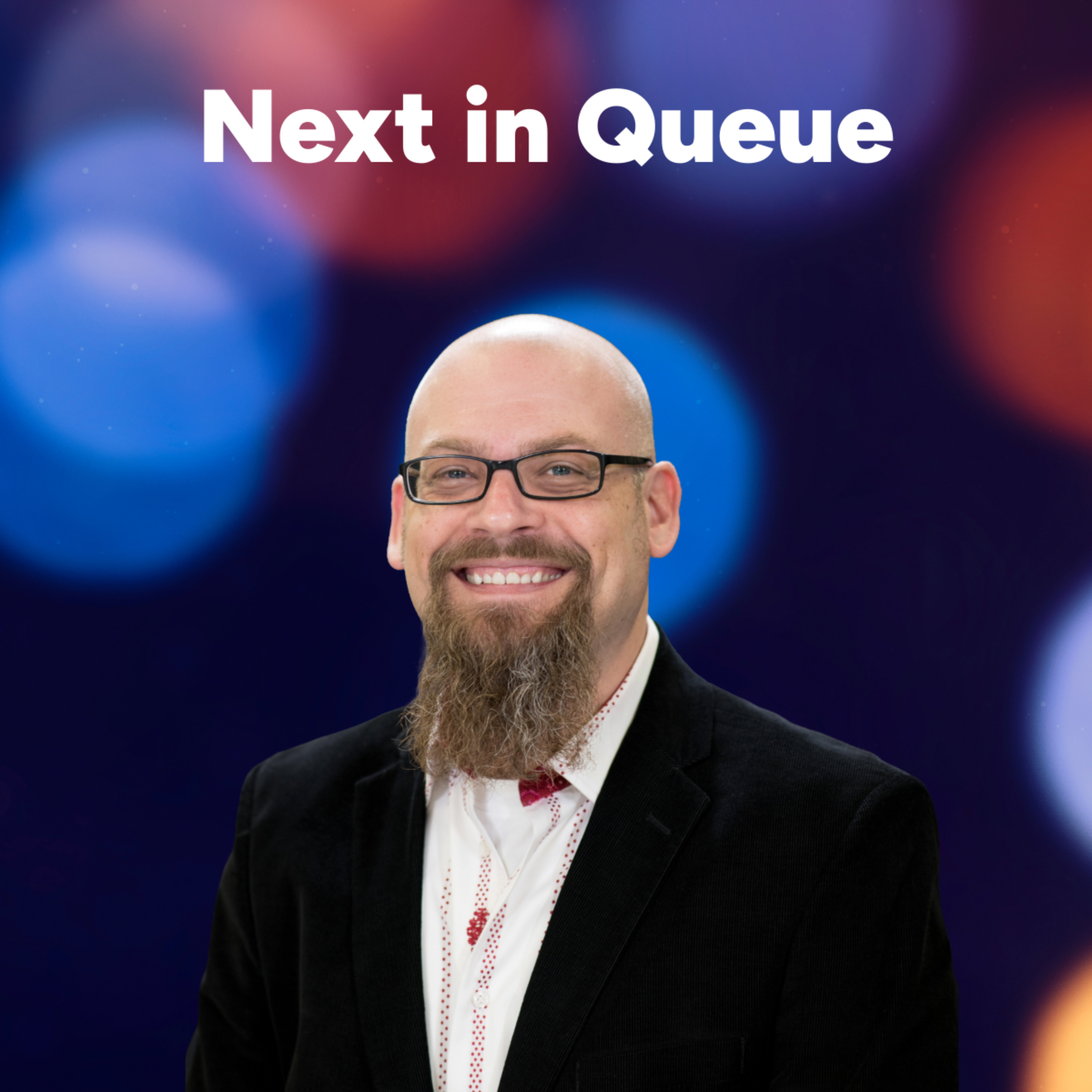
CX Passport listeners, today we are joined by Lisa Guzman. Rob Dwyer connected us, which already tells you this is going to be grounded in real world customer experience, not theory. Lisa spent more than a decade in remote startup environments, not inheriting polished CX machines, but building them from contracted agent to leadership from zero systems to ticketing platforms, KPIs, SLAs, QA frameworks, the whole thing.
She's created functions from scratch and stepped into others that needed a little bit of rebuilding, let's say. At one point, she described herself as Rumpelstiltskin, spinning gold out of hay. If you ever tried to scale support without resources, structure, or full-time teams, you know exactly what that means. Lisa, welcome to CX Passport.
Lisa Guzman (01:15)
Rick, thank you for having me. I'm very excited to ⁓ be able to share my experience with you and your audience.
Rick Denton (01:23)
Let's get after it then, because I'm excited too. You're coming to us today from Atlanta. You shared with me that it's 70 and sunny. I am jealous as we are in the throes of all sorts of thunderstorms. So listeners, if you hear a clap of thunder, we're just going to keep going. It's what we do here in North Texas. Lisa, you have spent most of your career in remote startup environments. How is building CX in that world fundamentally different from stepping into an established company with infrastructure and all those things already in place?
Lisa Guzman (01:51)
It is extremely different because I spent the first half of my career working on site. And so what you don't realize when you work on site, because you don't think about it, is how the culture is very much the same. Because if you all live in the same city, you're all cheering for the same teams for the most part. You're aware of the local news. ⁓ We use the same.
Rick Denton (01:54)
Hahaha.
Mm-hmm.
Lisa Guzman (02:20)
language speak as you will so we understand each other. Once you are working remotely, ⁓ even if it's just within the state or within the country, there are cultural differences that you need to be aware of. ⁓ Time zone differences and being aware of that, ⁓ learning how to communicate both synchronously and asynchronously is a huge part of that.
Rick Denton (02:32)
Mm-hmm.
Mm-hmm.
Lisa Guzman (02:49)
the kind of personalities that tend to be drawn to remote work, which I would say tends to be more of the introverts. so understanding that if you have an introverted team, people who like to not be seen, how do you help them and make sure that they are performing optimally without being a micromanager? I'm completely against micromanagement. is something that I have.
Rick Denton (02:54)
Yeah.
Amen, hallelujah.
Lisa Guzman (03:18)
I think it's counterproductive to the success of your team. And so how do you balance all of those things? How do you get to know each other? Because you don't have that proverbial water cooler. You're not going by somebody's desk and showing them a picture of your new grandbaby or something like that. So I would say for the most part, the biggest thing you need to think about is being intentional. Being intentional about connecting with people.
Rick Denton (03:20)
Yeah.
Mm-hmm.
you
Hmm.
Lisa Guzman (03:47)
being intentional about treating them like people instead of a cog in the machine, which can be very easy to do when you're working remotely and you're not seeing everybody every day. I think that's probably one of, if not the most important thing that you need to be considered of when working.
Rick Denton (03:58)
Yeah.
It is interesting right off the bat when you were talking about different sports teams or whatever that might be, having spent most of my corporate career in a brick and mortar environment and some of it in a remote environment. I hadn't even really thought of that, but you're right. You tend to have sort of those same rooting interests and you have those built in external factors that bring you together. And you've had to live in environments where.
that was humming along just fine. You've also had to go into environments where you were building that from scratch remote, not remote, just from scratch. You've also been in ones that while we're talking about things humming along, there's also those that, oh, like I mentioned earlier, it needs a little refurbishing, a little bit of repair. What are some of the first signals when you're going into that situation that you're looking for to understand that kind of situation that you're walking into?
Lisa Guzman (05:07)
I think a big part, especially when you start going worldwide, is number one, even before you think about customer service and the infrastructure of customer service, is understanding your customer. Because again, if you are going from where you're just shipping things or servicing people within the continental US and then you go worldwide, how do you...
Rick Denton (05:13)
Mm.
Lisa Guzman (05:35)
provide an excellent customer experience for another country. What they may consider an excellent customer experience may be very different than what Americans may consider to be an excellent customer experience, and you have to know that. Fun fact, a thousand years ago when I first started working, I was an operator at AT &T. And yes, yes.
Rick Denton (05:59)
come on. Like the actual
like press zero? ⁓ no way.
Lisa Guzman (06:02)
Yes, and I used to make a
lot of coins like this is something I know I'm aging myself a little bit, but
Rick Denton (06:08)
We've got to our listeners going, what it what?
Lisa Guzman (06:11)
But part of what I did was I had to connect calls from the US to other countries. And so I actually learned how to say hello in many different languages because I would have to talk to the operator. So like, for example, a lot of my calls were to China and I would say, whooshie whooshie. know, this is a little bit of a connection. Of course, I don't know all of it, but it was kind of building that rapport even in another country. And that's kind I've carried that with me.
Rick Denton (06:16)
Haha.
Yeah, that's cool.
Lisa Guzman (06:40)
throughout my career of one little thing that you can do to make sure that your customer and the vendors that you're working with, because that's also part of customer service, is connection. even saying one foreign word that they can see that you've made that effort. ⁓ Or ⁓ when I had a lot of vendors that were in ⁓ India, for example, I would always wish them happy Diwali during Diwali.
making those connections and showing an effort I think are hugely important ⁓ when you're thinking about things like.
Rick Denton (07:18)
idea of finding that little piece of connection is so vital when you've stepped into a culture that is that is already existing, not when you're creating from scratch where you get to build those blocks. How are you discerning? Okay, this is there. Those little elements of connection are there versus this is something I need to work.
Lisa Guzman (07:38)
⁓ I think you're right, first of all, that even with you saying the wrong words, the effort is there. ⁓ I am actually a first generation American. My parents ⁓ immigrated to the US. So I understand that balance between cultures and trying to see if there's a connection. ⁓ So I would say, yes, you want to...
Even when I talk to my own children, always say, at minimum, know how to say, please, thank you, and where's the bathroom? If you can say those three phrases, you're going to be OK. And I think when people see that you're making that effort, it's huge. I would say, talk to people. have to be able. There is a phrase that I go by that I heard a few years ago called cultural humility.
Rick Denton (08:11)
Right. Right.
Mm-hmm.
Lisa Guzman (08:30)
And what cultural humility means to me is number one, you do not consider your culture the best culture. Every culture has its qualities and distinctions and being able to be humble and say, you know what? These people eat differently than I do or these people speak different languages. It doesn't make them wrong. It doesn't make me right. want to...
Rick Denton (08:57)
Mm-hmm.
Lisa Guzman (08:58)
So
I think the first way to do that is to kind of ask questions like, know, what does, you know, the holidays mean to you? What holidays do you celebrate? And being open to like getting that feedback and saying, you know, this is important to me. This is not so important to me. ⁓ And, you know, so not going in like deciding for yourself what's important, but letting them tell you what's important.
Rick Denton (09:07)
yeah.
Yeah.
Yeah.
Lisa, I mentioned this during the introduction. It was when you and I were meeting the first time and I loved this sentence that you said. You described yourself as Rumpelstiltskin and for those that don't know that tale of long ago, Rumpelstiltskin is known for making gold out of hay. And there's a whole lot more to that story, of course. Well, when you're calling yourself a Rumpelstiltskin, that's not a very common term. So what does that actually look like in practice? What's this hay?
that most founders don't even realize that they're handing to you.
Lisa Guzman (10:34)
Well, again, shows my age a little bit. I do, I love that I have used that phrase for many years in my career, not just in startups, but in established companies as well. But how I would describe it is they think they know what's needed.
And they don't. So I will give you an example. I won't say the name of the company, but it was a startup. And they were using Gmail as a ticketing platform. ⁓ Anyone who knows anything about ticketing platforms would know that is not the case. So I would use the word flabbergasted when I saw that that's what they were doing. And so they're...
Rick Denton (11:07)
Good greedy.
Lisa Guzman (11:23)
Logic was well, we can see how many emails are coming in from customers and we can see how many emails our agents are answering so You know, they thought that's all that they needed and so they were actually ranking some of the agents very high because they were answering so many more emails versus other agents and After I took a breath I said
Rick Denton (11:32)
Cheers.
Lisa Guzman (11:51)
That is not how you want to be rating your agents. Because with Gmail, they can do what's called cherry picking and kind of look and see, oh, this is a very hard email. I don't want to answer that. And this email is very easy where I only have to say yes or no. I'm going to answer that one. So productivity, as far as with volume, is not a viable metric. And so I had to.
Rick Denton (12:00)
Mm-hmm.
Yeah.
Lisa Guzman (12:19)
explain to them ⁓ that that was not the case. You're evaluating your agents incorrectly. You're not quantifying for ⁓ quality. You're not quantifying for the troubleshooting and the really hard things. ⁓ So you can't just go by how many ⁓ emails someone answers. Also with ⁓ startups, they have a very limited budget, which is understandable.
So you have to know how to make the argument that we need a real ticketing platform, ⁓ one that can see trends. So if we're having a lot of broken items, like if you're in Gmail, you can't see if customers are getting higher than normal amount of broken items or shipping issues or things like that with a ticketing platform, you can identify trends.
Rick Denton (12:57)
Mm-hmm.
You're
Lisa Guzman (13:19)
You can also do workforce management through ticketing platforms. You can see who's answering questions when they're supposed to be working or when they're taking two hour breaks, things like that. So I had to not just say why or say that we needed a system rather, I had to give the specific whys and what you're going to get out of it because especially in a startup environment,
you need to show why the ROI is going to be there, return on investment. Otherwise, it's going to be a no. So not only did I have to review what was happening in Gmail, review the volume as far as how many emails were coming in so that I could establish how many agents were truly needed versus what we had, but also give them why these things are important, not just to have metrics to have metrics because
Rick Denton (14:17)
Mm-hmm.
Lisa Guzman (14:18)
Some
people can get so fully into metrics, they're not, what I wanted was to say ultimately this is going to lead to a better customer experience, this is going to lead to problem solving, this is going to lead to us being proactive versus reactive on issues. It's much better to have customers reporting something and then we can immediately do something about the issue versus losing customers. Because customer retention is so important.
Rick Denton (14:38)
Right.
Lisa Guzman (14:44)
especially when you're on a startup and how do you retain your customers? How do you get them to give word of mouth and reviews about how great you are without having that data?
Rick Denton (15:03)
Lisa, I love where we went with Rumpelstiltskin because as I heard you talking about the hay that was given, you talked about so many little gold pieces that were coming, gold threads, I suppose, that were coming out of there. And it really is so valuable to be able to take that and not just assume that someone says, hey, this is what really matters and no instead turn it into, and then also prove why it matters to business results. Lisa, I want to take a little break here.
want to stop the CX talk for just a little bit and let's move into the first class lounge. It's nice to take a break. We will move quickly here and have a little bit of fun. What is a dream travel location from your past?
Lisa Guzman (15:40)
Dream travel location from my past is that a couple years ago, I got to take my oldest ⁓ for his 30th birthday on a cruise to Bahamas, Jamaica, and Haiti. Why it was so, it's such a big thing was because when I had him, I was a single mom. I was actually homeless during ⁓ my pregnancy with him.
A lot of people said, you know, maybe you should give them up for adoption or maybe you should terminate the pregnancy. And I was 20 years old at the time and I decided to go my own way. And to have gone from that to 30 years later, taking him on a cruise to several countries, ⁓ it was a testament to everything that we had endured over the years.
Rick Denton (16:38)
What a special moment. What a special... I mean, I'm clearly understating it with my words. There are not words to capture what you just said there, but that's certainly... That rings pretty high up there in ⁓ the annals of CXPassport dream travel locations from the past and the meaning behind it is particularly impactful for sure. What is a dream travel location that you've not been to yet?
Lisa Guzman (17:00)
This might be surprising, but my dream travel is to go to Thailand. And the reason I'm going to Thailand is because I am a huge MMA fan. Huge. ⁓ And it was interesting because my children, have grown sons and they kind of wanted to show me ⁓ MMA and they thought I would hate it or thought I would freak out.
Rick Denton (17:08)
Hey!
⁓ okay.
haha
Lisa Guzman (17:29)
I immediately fell in love. The first match I watched, the guy was knocked out and he was out for so long, they wouldn't even put the camera on him. And my kids thought I was gonna freak. And I was like, I love this, this is great. Yes, because growing up as a half Cuban, may or may not be aware that Cubans, it's boxing and baseball. Those are the two big sports and my...
Rick Denton (17:43)
my gosh.
Lisa Guzman (17:57)
father unfortunately never had boys. So I was his oldest and so I was the surrogate son and so he would watch boxing with me a lot. And so I felt like MMA now is like boxing used to be because I came up during Tyson era when it was real, you know, and wow, it's like, ⁓ you know, they just dance around, but MMA, I just love how they get in there and they, you know, it's like gladiators.
Rick Denton (18:04)
Hahaha.
Yeah. Yeah.
Uh-huh.
Lisa Guzman (18:25)
and it gets
really exciting. So I figure, you know, why not go to Thailand and see it over there.
Rick Denton (18:31)
That's really, there have been plenty of folks that have said Thailand, right, that they wanna go to. I believe you may be my first guest that has said, hey, because of MMA, and it makes sense. And that's what I love about the variety of the show is there's so many reasons. And what I love about the variety of travel is not only there are a variety of destinations, but a variety of motivations that take us to the destinations that we wanna go to. I will say that when I've been to Bangkok, one of the things that I loved there was the food. So in general.
What's a favorite thing of yours to eat?
Lisa Guzman (19:04)
A favorite thing of mine to eat is I am really into Vietnamese food. They use a lot of ingredients and vegetables that we don't normally use in American diets. And you give me a bowl of pho and I mean, I'm just in heaven. And I also truly believe that when I am having a cold or anything, first thing I hit is a bowl of pho or a bowl of pho because I feel like it kicks out whatever's in me.
Rick Denton (19:08)
Mmm, okay.
You know, I've experienced things like that. Mine is kind of a ramen go-to, a little tonkatsu, it's interesting how that bowl of good warmth. There's a reason why mama said chicken noodle soup, and so I understand the fun. I certainly understand the ramen as well. Well, what about the other direction? What is something that you were forced to eat growing up, but you hated as a kid?
Lisa Guzman (19:55)
hated liver and onions. You, my, and my mother would try to say was steak and I immediately I'm like you're lying like the texture is not the same in any way shape or form. I am not a internal organs person so I wouldn't be down for like Jeffrey Dom or something like that but I don't do the organs. I can't.
Rick Denton (19:58)
Amen.
Yeah.
Okay
Well, boy, another first for CX passport right there. That is fantastic. Lisa, it is amazing how many times a liver and onion has come up. There's something about the generation above us that thought it was good. And then our generation got wise and realized, no, thank you. I do not want that. Lisa, it's time for us sadly to leave the first class lounge. What is one thing not including your passport, not including your phone that you will not leave home?
Lisa Guzman (20:51)
Hand sanitizer. I am a proud germaphobe. I represent, even before COVID, I was wearing masks on the plane way before COVID. I'm OG with the mask. And ⁓ fun fact, my sister and I worked at the same company for a while, and so we were flying out there together. And I put on my mask and she teased me and called me Michael Jackson. And then people started coughing on the plane before we even took off.
And then she's looking at me and I was like, what are you looking at? And she's like, well, can I get one of your masks? said, ⁓ you want one of my masks? And so I charged her a dollar. Now I got the pack from the dollar store, I paid for dollar and I ended up selling out the pack and I was able to use that money to buy my snacks.
Rick Denton (21:49)
Lisa, the entrepreneur, not just a germaphobe, but the entrepreneurial germaphobe. Well played. I like that. I like that indeed. And I love just the speed with which hand sanitizer is answered. And let's be honest, in a lot of the places that we travel, whether it's cleaner or not cleaner than where we are, it's just different germs. And so it's a great idea to clean up like that. I certainly am a supporter of the hand sanitizer for sure. Hey, let's go back to talk in remote work. You have lived it for years.
And someone who really understands it as opposed to someone who just kind of hears about it or dabbles in it doesn't have the same sense of understanding that you do. What are the real pros and cons from a leadership perspective around remote work and not the LinkedIn version thought leader kind of thing. The reality, you know what it means. Pros and cons are remote.
Lisa Guzman (22:41)
Wow, so I have worked from agent to director as a remote worker. And I can tell you on every level there are pros and cons. So if you're looking to just start in there as a frontline agent, think about troubleshooting your computer. When you work in an office, you call IT, you go grab a cup of coffee and let them do their thing. You are the IT now.
Rick Denton (22:50)
Mm-hmm.
Lisa Guzman (23:11)
So you have to troubleshoot. And I even worked as a contractor at one point where all the time that I was down was time that I wasn't being paid. So I was very, you know, I had to make sure that I understood that. Also, ⁓ some people are very extroverted and only get energized by working around other people. And you have to understand that about yourself. ⁓
Rick Denton (23:11)
Right.
Right.
Lisa Guzman (23:37)
I consider myself an omnivert, meaning I have my introvert times and I also have my extrovert times. And so that I works out really well for me. As a leader, let's say you're a supervisor, you have to be able to be comfortable getting out of the, oh, the way I manage my team is by walking around and seeing them in the cubicles. And if they're not in the cubicle, they're not there. And being able to let go of that is important because I think
Rick Denton (23:43)
Right.
Mm-hmm.
Lisa Guzman (24:05)
If you're not able to, that's where the micromanaging can come in and you're messaging people every time their light is not on, if they're on a system and you're like, wait, what are you doing? Oh, well, I'm doing this offline. it becomes, you're ending up putting more pressure on people and making them feel like they're being watched, which they are, but at the same time, you don't want it to seem like you're hovering the helicopter kind of thing. Same thing with once you're in the manager role.
Rick Denton (24:09)
Mm-hmm.
Lisa Guzman (24:35)
It's even more so you have to be able to let go and let your supervisors and your team do what needs to be done. And sometimes that means letting them fail, which I think when you are working remotely, you're a little bit more cautious about letting people fail, but it's something that you have to do so that way if you're not around or if you're working on things for your higher ups, that they know what to do. And then...
saying they know how to do it and also saying like if their project is due on Friday at three o'clock, if it's Thursday, you may want to just kind of give them a little heads up, but mostly let them do their thing. You have to be able to even more so in a remote environment, be able to empower your people to do things and to manage their goals and manage their projects in a way that works best for them. And that can be a little daunting because you're
Rick Denton (25:15)
Mm-hmm.
Mm-hmm.
Lisa Guzman (25:33)
letting go, which is hard.
Rick Denton (25:35)
Can I ask
you about, I'd like to ask you about that part specifically a little deeper because it, well, one, reminds me as, I've entered the empty nest phase and the other podcasts that I have with my wife about the loud quiet, which, Hey, inside a little, little secret for CX passport listeners, Lisa's going to be on the loud quiet too, talking about that. So you'll want to listen to that as well. But this idea of letting people do what they do, right. And giving them that freedom and not micromanaging them. You you wouldn't.
good managers wouldn't hover over somebody's desk, but they find themselves hovering virtually over people's desk, looking at that light in the remote environment. How have you, even in yourself or helped other leaders understand that the real productivity comes not by grasping, but rather by letting go?
Lisa Guzman (26:26)
That is something that is, you know, one of the biggest things that I've had to learn for myself as well as to ⁓ mentor those underneath me. And it's really easy, like if they're a parent, because I kind of refer to parenthood in the same way. Not that you're your reports parents, and please, I implore you to never call yourself their mom or their dad. I had a leader.
Rick Denton (26:34)
Mm-hmm.
yeah.
Hahaha
Lisa Guzman (26:55)
say that he was the dad of our family and I wanted to regurgitate. well, I'm trying to be polite. But, know, it's kind of the same way. you're one year old, you're gonna keep them within a certain range. Your 10 year old is gonna be in a very different range. And I kind of treat it like that on my team. My people that are on my team who have only been there a year.
Rick Denton (27:02)
I thought you were going to say some sort of MMA term.
Very good, very good.
Mm-hmm.
Lisa Guzman (27:22)
You know, I control things a little bit only to not from the sense of micromanagement, but from ⁓ letting them fly in a very controlled environment or a monitored environment. And I'm very upfront with that. I let them know I am doing this for this reason. I actually had an agent, it was so funny. She was very clear and direct with me. And she said to me in one of our 101s, she said, what do I need to do that I never need to talk to you outside of our one on one?
Rick Denton (27:34)
Mm-hmm.
Lisa Guzman (27:53)
And most people would probably take offense to that. I loved it. That was her goal. She said, after outside of everyone, I just don't. And I said, you know what? I'm glad you asked me that. And I gave her a list of the things that I wanted to see from her. You proactively give me updates. You ⁓ let me see the things that you're working on.
on your time, like I'm not saying when, but I'm saying if I can tell that you're showing what you're doing and you're being proactive instead of waiting for me to ask you, send it to me through the channels that we communicate on and you will never have to hear from me. And she was one of my best agents because that's what she wanted. And I think more people should be like that. But yes, you kind of have to establish, I think proactively, where you think
Rick Denton (28:31)
Mm-hmm.
That is fantastic.
Lisa Guzman (28:49)
your agents or your report should be month three, month six, month 12. And then when you are meeting with them and having those one-on-ones, you're also at the same time saying, hey, this is where we expected you at this time. Here's where you're doing great. Here's where you can do some work. So that way, especially if you give them that list ahead of time, because if they know that they're going to get their six month review or whatever,
Rick Denton (28:51)
Yeah.
Yeah, this is good. ⁓
Yeah, yeah.
Mm-hmm.
Lisa Guzman (29:18)
They already know, like, OK, let me look at this, let me look at that. And that I can know for myself if I'm reaching the goals. I think that's a big thing that a lot of leadership agents don't, leadership doesn't do. I had this happen myself where I'm thinking I'm doing great. I go into this meeting to establish where I'm at. I'm actually not doing great according to them. I didn't have their list of what.
Rick Denton (29:38)
Right.
remember
that when I was getting, not into leadership, because I didn't do great at the beginning, but as I was getting better at it, and two of the biggest themes were manage, set, clear expectations upfront, and anything discussed in a one-on-one should never be a surprise, right? There should never be those surprises in it. It's something that I had to learn, I think a lot of leaders have to learn as well.
to make sure that that's the way that a team wants to be operated. You a lot of that, you mentioned mentorship and a lot of that that you're describing is you've done it informally, you've also done it formally. You've talked about how mentorship is absolutely critical to success and customer experience. You've already given some examples, not in this fluffy kind of way, but truly structurally.
Tell me more about why you feel mentorship matters so much in customer experience specifically, and then the tactical things that you are doing to intentionally build it into a remote and distributed team.
Lisa Guzman (30:47)
First, I would like to say that the reason why personally I mentor is because I feel like it's a great way to give back. I've had a lot of mentors in my own life. I am first generation college graduate. A lot of the things that I've done is kind of like the first person to do it. And it's not always great when you're the first because you make a lot of mistakes.
Rick Denton (30:57)
Hmm.
⁓ huh.
Lisa Guzman (31:13)
And so
I think it's really, you know, I appreciate the people who've taken the time and energy to mentor me. And so that's my way of giving back. But also, very personally, I like mentoring my reports so that I can take a vacation in peace. You know, I've had leaders who, don't take real vacations. take, they call them days off, but they're still hovering. They're still in the Slack channels or whatever communication channels.
Rick Denton (31:23)
Mm-hmm.
Lisa Guzman (31:42)
watching things, I'm like, that's not really healthy. And so I mentor for that specific reason. I mentor also, especially remotely, because again, there's that whole, how do I move up in the company, especially because you don't have that FaceTime like you normally do when you're working brick and mortar. And so I mentor them on what they're doing well.
Rick Denton (31:47)
right right
Lisa Guzman (32:10)
even on things that they may want to do that don't necessarily relate to customer experience. I had agents who went to accounting, who went to sales, went to marketing, and people would tell me, Lisa, why would you do that? Because you're losing people and you're having to have to re-hire for them. And I said, no, there is a method to my madness, which is that now,
Rick Denton (32:16)
Right.
Mm-hmm.
Lisa Guzman (32:37)
Sally, who was working under me for three years and went to school and wanted to be in accounting. And now I mentor her and had matched her up with somebody in accounting. And now she's in accounting. Guess what? When I have an accounting issue, I call Sally. And Sally's going to help me because I help her. So now my influence is in every department. ⁓
Rick Denton (32:54)
Yeah.
Yeah.
And it reminds me a little bit of back in my consulting days, there was one consulting firm that was never really sad when people left the consulting firm because they viewed it as awesome. That's a potential client that we will have a lot easier time selling to in the future. So that idea of mentoring so that you can not only grow people for the good of what you were saying to start off with, and there's also that sort of, well,
you know, kind of self-interest element to it that is nothing wrong with that inside of the world of business. Lisa, I have enjoyed this conversation. It's been quite all over the place, which is how I like it. And I have certainly learned to never refer to my team as being my children. So, you know, less than one, absolutely. The value of mentorship. And I've learned a lot about remote work versus getting things started up versus having to fix them in the customer experience world. If folks wanted to, well, enjoy a little bit more of that learning and get to know you a little bit better.
What's the best place for them to learn more about you?
Lisa Guzman (34:00)
⁓ Check me out on LinkedIn. I do a lot of posts on my LinkedIn. So my name is Lisa Guzman, G-U-Z-M-A-N. ⁓ I actually looked and there's not a lot of people on LinkedIn with my name, fortunately. Look like my picture, so they get to see my face. But yes, just come on LinkedIn. I do a lot of posting on helping people understand leadership, understand the remote work environment, and also startups as well because
Rick Denton (34:05)
Okay.
There you go. All right.
Lisa Guzman (34:30)
There are startups coming up every day and there's all kinds of startups and it's fun. would say, if you're interested in building a plane while you're on it, is definitely for you.
Rick Denton (34:30)
Excellent.
Yeah.
Give Lisa a call. All right. Very good. Well, I will get your LinkedIn URL in the show notes as always. Lisa, this was a delightful conversation. I enjoyed it. Thank you for being on CX Password.
Lisa Guzman (34:53)
Thank you, Rick. I enjoyed it as well.