👉Love customer experience and love travel? You’ve found the right podcast, a show about creating great customer experience, with a dash of travel talk. 🎤Each episode, we’ll talk with our guests about customer experience, travel, and just like the best journeys, explore new directions we never anticipated. Listen here or watch on YouTube youtube.com/@cxpassport 🗺️CX Passport is a podcast that purposely seeks out global Customer Experience voices to hear what's working well in CX, what are their challenges and to hear their Customer Experience stories. In addition, there's always a dash (or more!) of travel talk in each episode.🧳Hosted by Rick Denton, CX Passport will bring Customer Experience and industry leaders to get their best customer experience insights, stories and hear their tales from the road...whether it’s the one less traveled or the one on everyone’s summer trip list.
I'm Rick Denton and I believe the best meals are served outside and require a passport
Music: Funk In The Trunk by Shane Ivers
CX Passport is a podcast for customer experience professionals that focuses on the stories, strategies, and solutions needed to create and deliver meaningful customer experiences. It features guests from the world of CX, including executives, consultants, and authors, who discuss their own experiences, tips, and insights. The podcast is designed to help CX professionals learn from each other, stay on top of the latest trends, and develop their own strategies for success.
📖 Our book is here! Get your copy of The Loud Quiet – Love, Laughter and Life in the Empty Nest, here: https://amzn.to/4sC0EV7
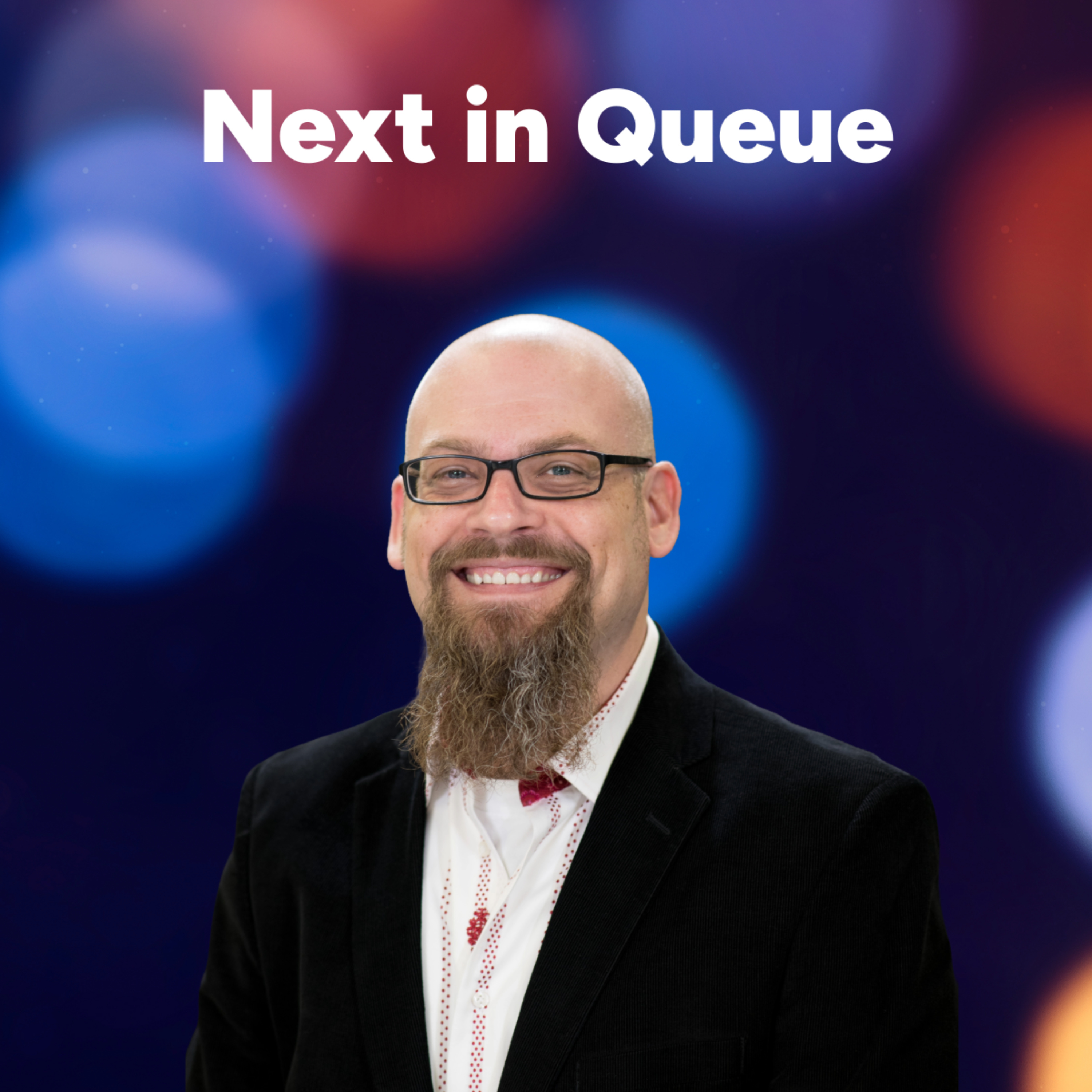
CX Passport welcomes Erik Lautier of Erik & Co www.erik.co, a seasoned ecommerce and marketing executive AND the creator of a new opera, Hamlet www.hamletopera.com, AND former touring artist with a Disney production AND an TV appearance. Clearly that will bring some interesting Marketing and Customer Experience perspectives!
Find out how CX and Marketing work best together. Understand which parts of a journey can you automate and which need to stay human.
Hear about what it’s like to rent the entire island of Pangkil AND get an understanding of how vodka, pickles and pig fat teach you how to avoid the fear of failure.
Hosted by Rick Denton, CX Passport, guides you through a conversation on customer experience and travel.
Rick Denton:
You're listening to CX Passport, the show about creating great customer experiences with a dash of travel talk. Each episode well talk with our guests about great CX, travel...and just like the best journeys, explore new directions we never anticipated. I'm your host Rick Denton. I believe the best meals are served outside and require a passport. Let's get going. Life brings you in touch with people having fascinating backgrounds. Today's guest Eric Lautier fits that bill for me. Eric and I know each other way back from our time at Duke University tarheel fans don't bail yet. I promise this will delight you too. In the career world, Eric truly is an expert in e commerce marketing, digital strategy. But if I stopped there, you'd only know a small part about Eric, how many CMOs Do you know that have written an opera, spent a measurable time on stage including touring with a major Disney production, and even an appearance in an episode of Law and Order? CX Passport isn't law and order...yet. So I'm incredibly excited to have Eric as our guest today, Eric, welcome to CX Passport.
Erik Lautier:
Thanks, Rick, thanks for having me.
Rick Denton:
Glad to have you here for sure. So Eric, with your deep marketing experience, I know you spend a lot of time thinking about customer experience. But often those two worlds aren't woven together, how do you weave those worlds to create that great customer experience?
Erik Lautier:
So you know, I think I think they have to coexist, and for brands to get things right, with the customer and with their marketing, they've got to bring those worlds very closely together. And, you know, ultimately, if I don't know how the customers feeling about something, how can I possibly reach that customer? How can I understand the the words, the imagery, the the points about the brand, about the business to bring out in any marketing initiative, if I'm not getting direct feedback from the customer would usually filter a filter through somebody who runs CX, the organization. So those those things have to come together? Otherwise, you're flying blind as a marketer,
Rick Denton:
which I've got imagine flying blind doesn't work too well, for the marketing world. It's so in that kind of vein, how do you know who the customer is? You're saying it's kind of fed through that cx team? But you know, how does that give you that understanding of who a customer is and what the customer community looks like?
Erik Lautier:
Yeah, so certainly, you know, the CX team plays a very important role in distilling down customer feedback and how they're feeling about various things, and complaints and compliments, all that type of stuff, right. But of course, there are other ways to get insight on the customer that are not directly coming from the CX team, there's, you know, really, I break it down into two different sections, there is sort of explicit customer feedback that we get where they are telling us stuff. And we are asking them questions. And that can be done in the form of surveys. It can be done in the form of brand research, focus groups, all of those types of things, you can build insight groups, and you can go out to them with questions. And you can ask things, right. And so you know, of course, all of that information is extremely important. And it helps build this picture of who your customer is. But there's also the implicit understanding of who the customer is. And that comes from really mining the data and understanding patterns of behavior. And if they buy x, are they more likely to buy Y or Z, for example? And if they are acquired in a particular category, are they more likely to move them to another category stay within the same one? so on and so forth? There's a lot of things you can see in the data in terms of you know, all the all the visits course you get to the site, conversion, neovi, all sorts of things and what moves the needle? And how do they respond. And if you change prices, does the ARV go up enough to offset what will likely be a drop in conversion, there's all sorts of data, I love that type of stuff. And you know, if you, as a marketer can synthesize this implicit customer feedback, the explicit customer feedback, and then of course, we get from the CX team, we got a pretty good picture of who that customer ultimately is.
Rick Denton:
The data piece obviously has come up quite a bit right, and talking about customer experience and understanding that, and it sounds like that's a great place to mine. Right? We know that that's a good place to find that insight there. How do you keep an ask this a lot of folks, how do you keep the humanity in the customer and your understanding of the customer? When you're looking at a set of numbers like that? How do you make sure that you're still considering the human that's behind those data?
Erik Lautier:
Yeah, listen, that's an excellent question. And it's a it's an issue that I think a lot of businesses but also a lot of vendors are trying to solve on behalf of those businesses because the the ability to personalize communication In an era where it's you know, chatbots, and all these other things, is important. And you know, one of the one of the questions that I asked some colleagues the other day is, how do we make shopping more emotional? Right? How do we celebrate when somebody makes a purchase, as opposed to a simple order transaction, email saying, Here's your confirmation, you ordered this, you spent this much money, right? There's no, there's no joy in that, right? Like, how do you how do you bring the emotion back into it, so that the customer feels that it's not just a computer, on the other end, it's not a series of ones and zeros. It is a human being that actually cares. And so I think that that type of sentiment has to pervade our work, and that we have to, we have to pursue that. So I think building that that customer relationship has to be grounded in that sentiment. But I also think, you know, certainly there are, there are opportunities to build process and automation around things to help you get to scale. Because, you know, managing one to one relationships at scale, it's not easy. And, you know, I think that, what, what you've got to do is understand which part of the journeys you can safely automate, and where you have to bring a human into the interaction. And if you start out, say, with a, you know, a chat on the site, where it says, hey, how can I help you, you know, select one, two, or three, or, you know, you're giving them options? And they click into one? You know, there are certain things that can be very easily automated, where is my order, right? really simply a matter of saying, Okay, well, here's my email address, or here's my order number. And that can automatically be tracked, your, you know, your shipping, confirmation tracking will be sent to you, all of that can be easily presented. But if you have something that's a little bit more complicated, the option to speak to a human should be there. And of course, that human then has to pick up immediately. Right. And so managing the flow of all of that is, is challenging, but I think that the brands that do it, right, are rewarded with a higher level of customer loyalty.
Rick Denton:
Boy, that is great. And it's funny. chuckling because there's a Twitter group that I'm a part of that is the CX Question of the day, there's a hashtag see XQ OTD. And the two things you just mentioned, there were actually two of the key questions that I think was Friday and Monday, and one was chatbots, yay, or nay? And then another one was, what's your favorite kind of hold music? And there was a whole thread of my favorite kind of hold music is, Hi, my name is Rick, how can I help you? Meaning there was no hold music? And so the you mentioned, when it gets to that complexity element, so first, the chatbot? How can they handle the mundane? And then how do we make sure that when it's time to speak to a human, it happens automatically? Do you find it challenging, because I know you work with brands, many brands, you've worked inside of brands, you now consult for brands? Do you find it challenging to help them understand that dichotomy between the the things that need to be that can be successfully automated, and those that still require that humanity or people still pushing too heavily towards that automation?
Erik Lautier:
Um, sometimes I think I think organizations just have blind spots around the things that they have done and always done. And that's, that's one of the reasons that you know, that I've brought in consultants myself in the past, right when I worked in an organization is like, help us help us see the stuff that we're just we're not seeing clearly, because we're so in the weeds with this thing, that we need that outside perspective to come in and say, well, we'll wait, why are you doing it this way? Right? Well, because we've always done it this way.
Rick Denton:
Such the worst phrase ever, right? That just makes my skin crawl?
Erik Lautier:
Yes. You got to get away from that. And so I know generally, I don't I don't find that there's resistance to it. I think there's actually some excitement around like, Oh, you know what, we hadn't really thought about that. And you Okay, let's give it a try.
Rick Denton:
Nice. Okay, that that actually makes a lot of sense. And I've got to imagine. So now I'm always coming back to the first question that I was asking you about the marketing and the CX side, some of what you're describing to humanity, the data, understanding the journey totally requires that there's a great information flow between those two teams. So what when you've seen it work? Well, what does it look like when cx teams and marketing teams are feeding that information back and forth and working in partnership?
Erik Lautier:
Yeah, so listen, I mean, I've got a client, where I would say it's probably the closest relationship with cx that I've ever had as a marketer. And it's, it's yielding fantastic results because I go to her and I say what, you know, what are customers thinking? Like, what are they saying? And she has her finger on the pulse of all of this stuff. And it's wonderful because she She is my source of truth around how customers are feeling. And you know, she, she runs the entire customer service org, and you know, all of the interactions and the chatter and all that type of stuff she sees it, she's able to distill it down in a way that can inform our perspective around marketing. And so, you know, we obviously need to understand the customer in the first place to build successful campaigns, then there is this layer of customer experience that gives us feedback to help inform them the marketing that we do. And also at the same time, a good customer experience is going to do the marketing for us. And in a sense, right, because somebody goes in, they have an outstanding experience with your brand. And they tell everybody about it. And so you know, I told you had a funny little quote here, but the, you know, the, the idea I came up with is basically CX is the meat in the marketing sandwich.
Rick Denton:
Nice.
Erik Lautier:
We've got
Rick Denton:
I like it.
Erik Lautier:
You know, we've got obviously to to market in the first place to bring somebody in. But if you have a good customer experience, then the you know, the next part of it that flows from very naturally is that they begin marketing for you.
Rick Denton:
Oh, I like that. I like that a lot. I love the idea of a good customer experience. We'll do the marketing for us. I think perhaps the title, this episode could end up becoming CX is the meat of the marketing sandwich. But we'll see.
Erik Lautier:
I like it. I like it. I know just audio. But you guys, are you everybody listening? You're missing? Rick just nodding heavily. I said that that gem,
Rick Denton:
they might be able to hear the wind of my head nodding as it goes by the microphone. So I've waited too long, though. I've got to know, pivot here, for sure. But you've written an opera, you've performed an opera is touring with Disney a TV appearance? Just tell me about those experiences? My goodness, what a fascinating background. That is.
Erik Lautier:
Yeah, listen, I'm certainly would have scripted in this way as, as Steve Jobs, you say you connect the dots in retrospect, right? You know, you'll do it going forward. And you just, you find some things you're passionate about, you pursue those things, and you know, later in life, you look back and you go, Oh, wait, I see how those are connected. And I you know, I see better how they're connected. Now, I you know, I there's still some things that are a bit mysterious, but, you know, listen, I, I had a passion for theater for singing for these things. And I just kind of followed that. And I, you know, ended up getting a Bachelor's in drama, I got a master's in music. I performed professionally and did well enough that I decided one day that I was going to build a website to promote my career. And of course, in building that website, that first website back in 2021 years ago, yeah. Bunch of actors and singers saw it started off the pay me to build sites for them. Here I am, you know. So it, you know, it basically created this gradual transition where I started doing more and more on the web. And, you know, one of my clients was a soap opera star who's starting cosmetics lines that became my first ecommerce site. And, you know, I gradually just got into this thing. So it ended up all all tying together in a way that I could have never predicted.
Rick Denton:
That's interesting. Clearly, I need a better source than just to say, That's interesting. But you're right, looking back, it helps tie those dots together. But I've got to imagine that some of those early days, being on that performance and being on stage, there's got to be an element where you're trying to connect with your audience. And I wonder how much of that, does that tie into your thoughts around marketing and customer experience today?
Erik Lautier:
Oh, it absolutely does. Yeah, I, you know, I think as, as a performer, you have, you have to be attuned to the audience, you have to be able to read the audience. And you have to understand, you know, based on who the audience is based on the show that you're doing, sometimes laughter is good. Sometimes it's the worst possible thing. Right. And, you know, I think you just become more hypersensitive to how people are responding to what you're doing. And that could be as a marketer, it could be as an executive and understanding how to read the room, if you're pitching something to the board, or whoever it may be. You know, there are subtle cues, and there's feedback that you get that help you craft your performance. And so I think, generally, performers are probably just a little bit more aware of that because they've been facing it their entire lives. You know, I think performers are also probably pretty good salespeople Because ultimately, they have to get up and audition over and over and over again and they get rejected over and over. and over again. Right and they just keep going. I mean it's it's a it's a really admirable trait I had I had trouble with that part of it. But you know, I definitely see a lot of tie ins between the performance industry and marketing and sales and just overall business.
Rick Denton:
Erik little change of pace here. Join me in the first class lounge. We'll move quickly here and hopefully have some fun. What is a dream travel location from your past? Okay, without
Erik Lautier:
question, it is Pangkil island that
Rick Denton:
okay.
Erik Lautier:
P A N G K I L when I was in business school, I went to INSEAD. And I spent one of the terms in Singapore. And there was a little private island off the coast of Indonesia called pinko. And they would basically run out the island for for a weekend. And when you get enough MBA students together to you know, to pull in like 100 bucks each or whatever it was, you can get the whole island. And so he we all went. And it was just this this paradise, right? I mean, it was it was, you know, kind of Robin Crusoe esque, but it was absolutely, stunningly beautiful. We had a great time, lots of food, lots of beverages, it was, you know, about as wonderful as like imagine for vacation. So, that was sort of a dream location that someday I hope to revisit.
Rick Denton:
Well, in that vein, what is a dream travel location that you've not been to yet so you can't do panchal Island, but where would you want to go that you've not been to yet?
Erik Lautier:
You know, so there's another island, known as Iceland, which like to make it to at some point, very different, obviously, not tropical, but there's a there's just a beauty to it. And you've got thermal baths you've got diving in between glaciers and crystal clear waters and just something that I've never experienced before. And for me, that's, that's part of the excitement is show me something new, you show me something different. You know, and that's in tying it back to two career choices. That's been the excitement of being in the digital space is the the constant evolution means there's always something new, there's always something exciting. There's always something that I haven't seen before. That keeps me engaged in it. And I think that probably mirrors my my interest in different travel locations.
Rick Denton:
Yeah, very nice. I Iceland's on my list as well. There was the recent shots and scenes of the lava flows, and the hikers and people getting right up pretty close to the lava flows, it seemed like, and it just reminded me how beautiful and how different Iceland is. And so absolutely, it's on my list as well. What is a favorite thing to eat?
Erik Lautier:
Ah, there are so many. How do I choose? I so I've got a weakness for sushi generally speaking, but there's a in particular little sushi dish, which is a hamachi yellowtail thin slice with a very thin slice of it could be jalapeno or it could be another pepper and forget what kind of sauce they put on that thing, but it is absurd. And any sushi restaurant I go to that serves that I ordered, like without question. So that's sort of my my go to and of course, like the entire thing. You know, if you stacked up all those tiny little slices, it might be enough to fill a thimble. And it probably cost that much in gold. It is. Yeah, that's delicious.
Rick Denton:
Boy, so you're not finding on your sushi buffet, but it definitely sounds fantastic. On the flip side now what is the thing your parents forced you to eat but you hated as a kid.
Erik Lautier:
You know, I would say I was not a fan of broccoli. And now I will pop broccoli all day long. Like we throw it in the oven and get it nice and kind of charred on the edges and keep it simple. Just a little lemon juice on there and a little garlic a little salt and pepper and little olive oil and oh my god, Rick, I will I will pop that stuff like candy. I prefer it to candy. So yeah, things change right then
Rick Denton:
well that's it I guess this is an example of Hey parents you're right keep forcing because who knows it's gonna set the set kid up for the delight of broccoli in the future. What is one travel item you will not leave home without.
Erik Lautier:
You know it feels so it feels so cliche to say my phone or my laptop, right? I can't I can't remember. I'm going anywhere without either of those things. I am one of those people who can pack in about five minutes. And I don't need to plan it out, I just want to start doing it. And so, you know, if I end up in some place, and I'm like, Oh my god, I don't have this, then I don't know, I improvise, or I figure something else out or go try to find it. You know, I I'm okay with that. I'm okay with that uncertainty, and that sort of like, Oh, I'm so stupid. Why bring that thing that I needed? So, so yeah, I don't have anxiety around, you know, oh, no, I can't leave without this. I'm willing to just, you know, roll the dice and, and see what happens.
Rick Denton:
Eric, I want to make sure that our listeners are able to get a chance to hear the opera that you've written. I did not ask you this earlier. But I did want to ask, how can they find the opera that you have written and enjoy it?
Erik Lautier:
Ah, thanks for asking Rick. So I have written a modern adaptation of Hamlet. And well, it's on version 3.0. Now, so first, I wrote it in French, okay, because that's kind of how I heard the music in the first place when I read French translation of Hamlet years ago. And then I translated it into a modern English version. So I basically translated Shakespeare back into English.
Rick Denton:
Interesting.
Erik Lautier:
I don't know how many times that's happened. But, um, and, you know, I produced a recording with, with really some of the finest opera singers in the world. And it is at Hamlet opera.com. But there's a version 3.0, which is, I've made a number of modifications. I've also brought back the original Shakespeare pretty much verbatim. And it looks like we've got ourselves a production coming up. So I'm not going to announce yet I'm gonna let the theater that's producing it, make that announcement. But, you know, for now, you want to get a feel for it, Hamlet calm. It's posted on YouTube and some other places, but the links are at the opera site.
Rick Denton:
Very good. And I'll make sure that those are in the show notes. Everyone, hit pause right now. Go over to Hamlet, opera.com Have a listen, come back and hear the rest of the show. Eric, I know to ask you three words. I don't know why. But I know I'm supposed to ask you vodka, pickles, and pig fat? What was that experience? And how does it influence your business approach?
Erik Lautier:
Wow. Yeah, um, so my wife is Russian. And the first time it actually be the only time so far but but the first time she took me to Russia, was in 2011. And this before we had kids, and all that, and I met her relatives for the first time. And we went out to various towns and in Russia. And they're not, they're not in Moscow or St. Petersburg, they're, you know, in places like mihailova, which is a three hour bus ride from the town of Belgrade. Okay, and so there are there are these wonderful traditions that are still practiced there. And one of those is when you meet somebody new, you basically just feed them vodka and serve them. A number of little snacks, which include pickles, and pig fat, and some other things. And I spent like three days doing nothing but eating pickles, and big fat and chasing it down with vodka. And I, I'm still a little hungover. From that in 2011, I imagined still have a little headache from that it was it again, it was very different. It was new. I mean, how does it influence my business approach? I think lucky. You say what the hell and you just you dive in and you try things and you experience things and you can't you can't be afraid of what's new and what's different. You have to go for it. And you may conclude Okay, that was the worst idea. ever know that? And then you don't, you know, you'll learn along the way. But what what I think you can't do in business, I think you can't be afraid of failure. Because first of all, it's just a label. Second of all, you know, it says failures that get us to success and you know, how we figure out things along the way, we got to make some mistakes and learn what not to do to sort of narrow down our universe of options. And so you know, I think you just got to go for it and take some chances and not be afraid.
Rick Denton:
I absolutely love that. I never thought that vodka pickles and pig fat would take us To the avoiding the fear of failure and making sure that that, that brings us down a path of trying new things, but I can absolutely see it. Although I must admit, I'm a little bit thankful that we are doing this via zoom, because I suspect that you might have shown up with vodka, pickles and pig fat for this section. So I am, I'm a little thankful that we are doing this across the interwebs. Hey, let me close this. I want to circle back to our cx and marketing discussion earlier. And there's a there's oftentimes I hear people say, marketing is just customer experience are the reverse. And customer experience is just marketing. I know we've talked a lot earlier about kind of how they partner together, what do you think when you hear people say those things.
Erik Lautier:
Um, so I think that's a simplification. And I think they're absolutely related. But they are, there are different points in the funnel, right? I can market all day long without somebody ever becoming a customer. And somebody could be a customer and have absolutely no impact on our marketing. And you know, that, again, going back to my meat in the marketing sandwich analogy, there's a certain flow that I think has to happen, where one is informing the other. And we can do things in marketing that either make our customers happier or less happy. And that certainly is going to impact the customer experience that they have. And it's going to impact things that maybe we do in the store online, and so on, so forth. And so certainly marketing is feeding that customer experience. But then, of course, that customer experiences coming right back around, and it is feeding the marketing because we are learning things through that interaction that make us better at what we do. And so you know why I think they're inextricably linked. They're not the same thing. And they need to be recognized sort of in their in their own space. And one needs to learn from the other in perpetuity, love it.
Rick Denton:
Definitely. I totally agree. And I, I can imagine that's why you and I are so aligned, there's I have that same feel that while they're, they're similar, they're related. They're they're they're sisters and brothers, but they are not, they're not twins, and being able to bring those two worlds together is how you create an overall delightful experience for that customer. So, Eric, thank you so much. This has been speaking of delight, such a delight to talk with you. It's great to talk about business, it's great to talk about how customer experience and marketing can weave together what that partnership really looks like. But it's also fascinating to hear how performances on stage help advance your approach to business and help your understanding of, of how to take your experiences forward. And it has just been an interesting, interesting conversation to say the least. I will say that vodka pickles and pig fat may stick with me more than any other phrase, but I will hopefully replace that phrase with CX is the meat in the marketing sandwich. So Eric, thank you so much for your time today. I appreciate it had a blast. And I look forward to having you on in the future.
Erik Lautier:
Thank you, Rick. Thanks for having me.
Rick Denton:
Thanks for joining us this week on CX Passport. Make sure to visit our website cxpassport.com where you can hit subscribe so you'll never miss a show. While you're at it, you can check out the rest of the EX4CX website. If you're looking to get real about customer experience, EX4CX is available to help you increase revenue by starting to listen to your customers and create great experiences for every customer every time. Thanks for listening to CX Passport and be sure to tune in for our next episode. Until next time, I'm Rick Denton, and I believe the best meals are served outside and require a passport.