👉Love customer experience and love travel? You’ve found the right podcast, a show about creating great customer experience, with a dash of travel talk. 🎤Each episode, we’ll talk with our guests about customer experience, travel, and just like the best journeys, explore new directions we never anticipated. Listen here or watch on YouTube youtube.com/@cxpassport 🗺️CX Passport is a podcast that purposely seeks out global Customer Experience voices to hear what's working well in CX, what are their challenges and to hear their Customer Experience stories. In addition, there's always a dash (or more!) of travel talk in each episode.🧳Hosted by Rick Denton, CX Passport will bring Customer Experience and industry leaders to get their best customer experience insights, stories and hear their tales from the road...whether it’s the one less traveled or the one on everyone’s summer trip list.
I'm Rick Denton and I believe the best meals are served outside and require a passport
Music: Funk In The Trunk by Shane Ivers
CX Passport is a podcast for customer experience professionals that focuses on the stories, strategies, and solutions needed to create and deliver meaningful customer experiences. It features guests from the world of CX, including executives, consultants, and authors, who discuss their own experiences, tips, and insights. The podcast is designed to help CX professionals learn from each other, stay on top of the latest trends, and develop their own strategies for success.
📖 Our book is here! Get your copy of The Loud Quiet – Love, Laughter and Life in the Empty Nest, here: https://amzn.to/4sC0EV7
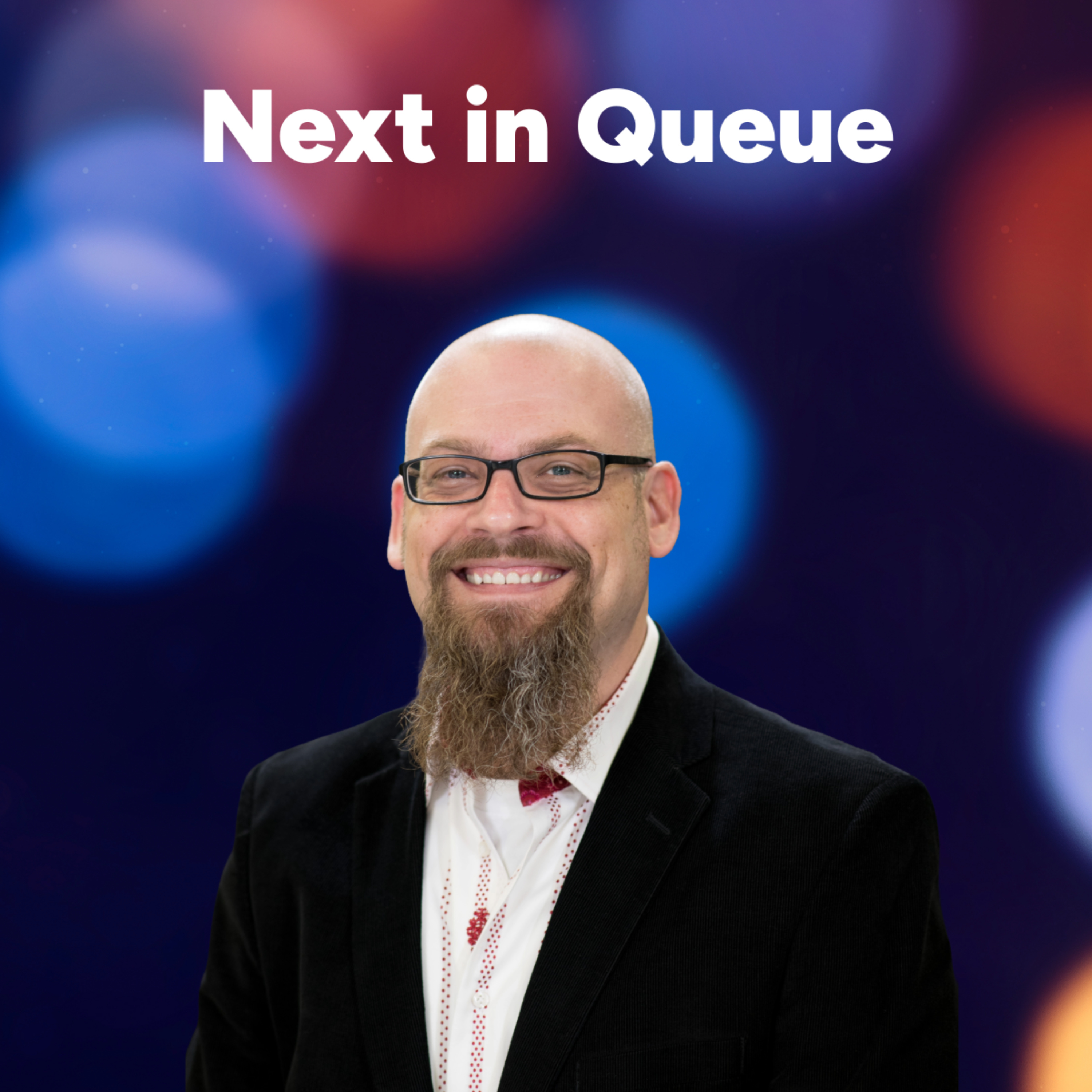
Today’s guest Jonathan Daniels, the founder of CX Centric, brings us a global customer centricity approach to CX. In today’s episode, we get to hear why Jonathan hosts CX Centric conversations in which he purposely choses a global slate of facilitators and participants.
Learn from his 8 CX Centric principles and why strategy is well and good but how you achieve it in reality is what really matters.
And yes...discover why Rwanda is the Singapore of Africa.
Hosted by Rick Denton, CX Passport guides you through a conversation on customer experience and travel.
Employees do what is measured, incented and celebrated
Customer data should be exchanged for success and experiences
Adapt quickly around customers and the environment
Proactively plan for both organisational and customer success
Plan for your customers’ current and future needs
Continuously learn and improve
Rick Denton:
You're listening to CX Passport, the show about creating great customer experiences with a dash of travel talk. Each episode well talk with our guests about great CX, travel...and just like the best journeys, explore new directions we never anticipated. I'm your host Rick Denton. I believe the best meals are served outside and require a passport. Let's get going. I think of today's guest as one of the hardest working people in cx. I've personally benefited by participating in a flurry of webinars and other sources of education that our guests tirelessly creates all to advance the mission of helping people and companies become more customer centric. Today, I'm joined by Jonathan Daniels, the founder of cx centric, who focuses his time on training and coaching organizations and leaders on the practical ways to achieve customer centricity note, a theme here, the customer is at the center of all Jonathan does. Additionally, I love Jonathan's global approach, especially in his webinars, as he is purposeful in bringing a truly global representation to the audience. And the facilitators will keep that global thing going, as we hear about his travels to Rwanda and beyond. Jonathan, welcome to see x passport.
Jonathan Daniels:
Rick, thank you for having me. And thanks for the nice introduction. Also,
Rick Denton:
trust me, I've definitely benefited from those webinars and love them very much. So, Jonathan, when you think of customer centricity, you often speak of getting beyond the theory and into operationalizing it? How do you go about that?
Jonathan Daniels:
Yeah, so what I have learned over time is that there are a lot of consultants, a lot of enterprises that talk about customer experience strategy, creating a strategy. And the gap that I see is okay, strategies were in good. A nice picture is well and good. But how do you actually achieve this? In reality? what steps to take today? I have more customer experience team, I have some data and insights, what do I do? So that's the sort of aspect that I like to focus on. So for this, there's a few parts the first part is customer experience Improvement and Innovation. So being able to review what is the current situation of the experience that you offer? What are the pains? What are the opportunities? And how do you convert this into basically your development pipeline, your experience pipeline? So basically, how can you improve the experience, and you've got to be able to do that quickly. And at scale, you don't want to have problems from the customer today, that you're going to take six months to fix, if they're important problems, you need to have those in a roadmap. And they should be like, okay, in the next two weeks, three weeks, we're fixing this. So this will help you prioritize what you're doing. The other aspect is a customer success organization. Actually, things are more complicated today than they were six months ago, a year ago, five years ago, there's a lot more data, a lot of interconnected products and services. And basically things are just, yeah, it's just a lot more complicated. Customers, after the near enough, have a degree sometimes understand what products and services some companies are offering. So with the customer success, it's like, okay, your customers there? How do you make sure that they understand the value that you can bring? And how do you make sure that they actually achieve that value. So that is something crucial that you've got to have in place. And the third is customer centric practices. So how do you get your whole organization to start rallying around the customer, start thinking more about the customer in what they're doing, and start understanding the real impact then that they are making to people's lives through your organization.
Rick Denton:
What I like about what I'm hearing from you is, is that taking it from the ethereal, taking it from the I'll even use the esoteric of customer experience, but rather hear the practical things that a company needs to go through in practical categories that a company needs to understand and apply to be able to deliver that overarching great customer experience strategy. You know, in again, here, I hear your customer centricity if I were counting, and I wish I had counted how many times you mentioned customer in, in what you were saying there, it shows me how it is absolutely at the heart of who you are. But I know that you also coach leaders and organizations to be customer centric. What are some of the habits you recommend to them to become a successful cx leader?
Jonathan Daniels:
Yeah, definitely. So let's see, eccentric. We have developed a key principles behind customer centricity and some of the these I use when coaching leaders so for instance, Cost of customer familiarity breeds alignment, and also the concepts of continuous learning. So we're not talking about continuous learning, we're talking about about both learning about business operations and also about customer challenges. So for instance, do you know the challenges that your marketing department or current currently having all the customer services department, or the finance department, actually, we have to be able to learn about our business in order to be able to serve our customers better? And then obviously, on the other side? Do you know about your customers? How much do you know about them? Do you share that knowledge across your organization, as a, as a leader, you should be using your product or service, you should be talking to customers, listening to the support desk, you know, listening in on calls, etc, or the chats online, wherever it is, reviewing data, and basically just sharing that knowledge to help bridge the silos? That's the first thing. Yeah, I think the other the other aspect is, employees do what is measured incentive and celebrated. So as a cx leader, we really encourage regular assessments of the customer centric practices that your organization has, and also the customer operations. So I see Accenture, we have assessment tools that you can use both to measure things at an organization level, and also an individual level, for instance, for a customer experience leader as well. So actually measuring and measuring often is very important. The other thing is co creation. So never do anything alone. So you create an A customer experience strategy, don't sit in a room for a few days, flush it out, and then see what people think, involve different people across the organization into what you're doing. So that's something very important. And that's through all the aspects through when you're scoping your your customer experience initiatives, or you're analyzing or you're planning what you're doing, or you're implementing, you've got to involve different people throughout the organization along along the journey. The other thing is planning for for current needs, so your customers current needs and also for future needs. So in essence, you've got to have a roadmap is called, you should be saying these are the top 10 things that I need to do to improve the experience. If we hit these, this will be that the outcome for the business and for the customers and then on top of this is like this is what we're going to be delivering over the next six to 12 months and you make senior leaders responsible for delivering them for delivering that because you know, as a customer experience professional, the changes that needs to take place to improve the experience probably won't fit within your remit, there'll be things that need to be done across the organization. So you need to make the senior leaders from those other departments responsible for delivering and hold them accountable to the dates as well And the final thing I'd suggest is to take it seriously a lot of customer experience professionals and customer success professionals as well that this the slightly waiting for a seat at the table the this the basically asking and waiting for others to validate what they're doing. What do you think about customer success and customer experience? Do you think is adding value do you see the ROI for me I don't I encourage people not to ask, Do you see that? Do you see the value of that instead you take it seriously and you go out to prove to prove to prove it over again over and over again with the results that you're getting? you present the results and then you present the next steps and you keep going in that motion? Yeah.
Rick Denton:
What I like about what I'm hearing you say there is and I'm thinking about the beginning of what you said and at the end of what you said so almost on a spectrum of humanity to let's call it financial results right and so you started with that customer familiarity breeds alignment get involved with listening to calls and actually doing if you have a product that is usable than the go out and experience that product shot for that product use that product or if let's take travel fly on that airplane, stay in that hotel, those sorts of things and then in the end is also then there's the that's a humanity side than the the end that your book ended with was the the numbers and that is prove out what it is and I have found that combining those two worlds creates great success for the CX professional to be able to advance initiatives but then for the company as a whole to embrace those customer initiatives and and really take it both into their heart right that's the customer story you're describing the beginning and then in their mind which are the dollars that are Why many businesses are in business and that is to make a profit. So I like that that approach there. And we will. For those that are listening here, check out the show notes. And you'll be able to see some of these principles and be able to understand them a little deeper. Jonathan, you're teaching me now you've taught me before, I've learned through many of the things that I talked about these webinars where I've learned, let's go back to those cx centric conversation webinars that you host. What gave you the idea to ensure that the globe was represented by the facilitators? And why was that important to you?
Jonathan Daniels:
Yes, it's a good question. I appreciate you mentioning the CX centric conversations. So for a few a few years ago, I sets up cx Brussels and not for profit in Belgium, where we were running events for customer experience professionals in Belgium, and we were offering workshops and training, etc. And then during the COVID, it became clear that these events were no longer possible. And because I've worked with a lot of consultants around the world delivering a lot of these transformation projects, I realized that it was a point to start bridging the gap. A lot of times, or a lot of times people think oh, my, my company, my country, sorry, is behind in terms of customer experience, practices, etc. They think that okay, it's probably the the UK or America or maybe Netherlands as well. He's sort of pushing ahead. And they think that the challenges that they're facing or not the challenges that other countries are facing. So that was the first thing that I wanted to do, I wanted to just really bridge the gap. And really, just compare really, that's how I started out with a second comparison, like, what challenges are you guys currently facing in your role today as a customer, customer experience, professional customer experience leader? And that was the first thing that's how it started. And it was quite interesting to see that, actually, we're all facing the same situation and and challenges you had no matter where you are. Yeah, there's, there's obviously a few companies who, who I've met who are a bit more further down the line, they've had their customer experience departments open, say for six, seven years now. They've got all their processes in place. But for the majority, we're still at the stage, we're still we're still sort of forming and norming as Yeah. So yeah, it's been interesting, obviously, just just the international field as well, generally, just to get everyone connected. And it's very exciting to have, you know, 100 people from across the world or different continents altogether. It's just exciting overall.
Rick Denton:
And it is, it is something that I have, I like what you said there, and that is that some people come into that thinking that my country, my company, whatever it might be, is behind. And sure there'll be a spectrum of companies that are way ahead in the CX world and way behind. But I think and I've observed this in the webinars as well, the conversation, let's call them that, because that's what they are, they really are conversations rather than webinars. And it's it's less about a particular region being ahead or behind. But rather, each individual brings a different perspective, a different experience, and they're able to add to the conversation. And I've learned from companies that might be perceived as or companies and countries that might be perceived as being behind as much as I've learned from companies and countries that are perceived as being ahead. And it's it's been particularly valuable. Now I do feel somewhat sympathetic for those that are enjoying the time zones of the middle of the night. So far, I've lucked out when you've scheduled that it's only been early morning or early, early evening for me, but it has been a brilliant global conversation. You are a very global person. And that's one of the things that I think drew us to a connection, both in the CX space, but then in the travel space, and you're very connected to Rwanda, as I discovered when you and I were talking last time and have made actually several trips there. I can tell you this, I don't get to talk Rwanda travel very often. Tell me about your experiences there.
Jonathan Daniels:
Yeah, so my wife, she's originally from Rwanda. I mean, she didn't grow up in Belgium, but she was, she's originally from there. So she's got family there. And we've been there several times now. And stay for quite a while when I go there. So maybe it's like, we stay for five weeks, six weeks at a time, normally in the summertime. And yeah, it's, it's an amazing country. It really is. are really, really advice. If anyone is thinking about Africa, they should definitely check out Rwanda. Some of the things for instance, the temperature is pretty moderate in the sense that it's not boiling hot, it's not cold, it's sort of just just stays at around 25 degrees. So it's just like the nice temperature wonder actually the word means land of 1000 Hills. So wherever you are in Rwanda for some reason, there's hills everywhere. So it's like, if you take a picture of Rwanda, there's probably going to be some hills in the background. That's just the way it is. Yeah, it's quite, it's quite nice in terms of the way it looks and stuff. The culture is very nice. They're very open. They're very polite, very friendly. They do enjoy drinking. We
Rick Denton:
now we're getting to the heart of it. Okay. Yeah, pretty hills. But now,
Jonathan Daniels:
no be honest. They love drinking. They have very nice food. The people have a distinct look about them as well. And also, genuinely in terms of the economy, there's Yeah, there's, there's a lot of opportunity there. They there's a lot of investment happening now as well. So from a business perspective, it's it's very interesting.
Rick Denton:
You mentioned a phrase to me that I wanted to bring up here and you you referred to Rwanda as the Singapore of Africa. Tell me what you meant by that.
Jonathan Daniels:
Yeah, I mean, this phrase, yeah, it's, it's well known right now, because basically, the President has done a very good job to, to really push the company, the country forward, and really, just make make it a place where the, the ease of doing business is very, how do I say very high, it's very easy to do business there. And yeah, they, they have a very sort of full forward looking perspective there. When you speak to the people there, they're very passionate about the country, and they have their plans, you know, their 20 year plans, therefore, year plans, etc. And you can see things are moving, you can see things are moving. So it's a very exciting, exciting place to be even from a technology perspective as well. They're investing a lot in technology, they are educating their, their citizens as well. So even just from that standpoint, they they are really placing themselves or positioning themselves in in a place where they can really grow and advance in the next few years. So it's an interesting place to be.
Rick Denton:
Hey, let's keep the travel going here. But join me in the first class lounge, we'll move quickly here and hopefully have some fun. What is a dream travel location from your past?
Jonathan Daniels:
It has to be create. So create is one of Yeah, one of the Greek islands. I don't know if you've been there before now. Great, you've got it, you've got to go there. So if I explain a bit about it, basically create is lovely. Firstly, because obviously it's a hot islands, the weather's nice. The beaches are amazing, like just beautiful. And on top of this, probably the most important is the food. They've got loads of fresh vegetables, etc. So everything they cook is basically fresh bio sort of food. So yeah, it's just a lovely place to go. So I really recommend that.
Rick Denton:
Okay, very nice. So thinking to the future, what is a dream travel location you've not been to yet.
Jonathan Daniels:
I think I've really want to go to Kenya. It's a place that I haven't been yet. But even from a technology, technology perspective, they're doing a lot of interesting things. They've got a lot of good culture. They've got the safaris there as well. I've seen on Instagram quite a few good parties and stuff there. All right, so I need to get over there.
Rick Denton:
I like it. I like it. I've heard food woven throughout your discussion of both Rwanda and Crete as well. Tell me though your favorite thing to eat?
Jonathan Daniels:
Yeah, definitely. Probably I'm hungry as we as we record this podcast. But for me, my background I'm from my family's from Jamaica originally. And yeah, Jamaican food is very good and if you've had it before
Rick Denton:
it Oh, I've had I've had many Jamaican food item definitely love it.
Jonathan Daniels:
So definitely I'll have to bring up junk checking at this point. Like this is just part of the culture. Like in Jamaica we do a lot of barbecues and yeah, we get the we season that chicken, we put it on on the barbecue and when that's finished, it's just delicious. Sorry for the vegan listeners etc.
Rick Denton:
We are a welcoming group here we're welcoming the vegans we're welcoming of the carnivores we we celebrate all a cx passport, and jerk chicken is a spectacular meal so I can see why that is your favorite thing to eat. On the flip side, what is the thing your parents forced you to eat but you hated as a kid.
Jonathan Daniels:
Yeah, probably just in general vegetables like everyone else to be honest. I mean, I do like carrots and broccoli, but things like cauliflower, no, not really into it. So
Rick Denton:
vegetable certainly if I were to keep a tally, I'm going to need to go back and do this in the episodes and collect vegetables definitely is winning this question certain specific ones, for sure. What is one travel item you will not leave home without.
Jonathan Daniels:
Um, to be honest, I try and travel lightly. I mean, even even my mobile phone, sometimes I do like to live that in the hotel in where I'm staying, you know, I don't like to walk around with it, because I like to just be in the moment. So to be honest, there's not really much that I need, apart from just to have had a good night's sleep. So I'm ready with energy to face whatever is in front of me.
Rick Denton:
advocates are vital to creating customer centricity. How have you seen organizations be successful in creating or empowering those advocates?
Jonathan Daniels:
Yeah, definitely, I think it's a good question. Because often in terms of customer experience, and customer success, there's a lot of talk about the net promoter score, NPS? And, oh, should we do it? Or should we not? And for me, the answer is, yes, we should do it. But it's just that we need to mobilize the advocates. So when a customer is labeled an advocate, we need to have processes in place. So that actually we use these customers as almost as a resource. Yeah, a call that customer as a service. So for instance, you can do things like customer stories. So if you have a customer who has kind of positive experience with your brand, then you can turn that into a case study, you can ask for testimonials, you can actually interview them, and ask them how they can improve how they think we should improve the experience. And this can go into your strategy, this can go into your roadmap, you can actually ask them to market to other prospective customers as well. This is another thing, they can share your information on social media very easily or through email. And this can help grow your business. So the other point is that actually, the way I look at customers is a bit different. And it's the fact that today, things are more complicated than there were cell sort of 5060 years, years ago, right? Life Life, in general, the problems that we're facing are more complicated. So actually, the way I see the relation between an organization and a customer is that actually there is a shared problem, actually, you share a problem between yourself and the customer now, and actually, you work together, it's not always you just delivering something for the customer. And you're basically serving them, it's almost a case of you guys working together. So that's the other point to make is that when you have advocates, they, they can work better with you, they can help you improve your business as a whole, they can offer you suggestions as to even how you can do things better, how you how you can open new markets for your business, there's a wealth of benefits when working and really becoming more intentful on how you manage advocates.
Rick Denton:
Okay, that makes that makes sense to me. The idea and here's one thing that I gained from what you just said there, we've heard about advocates or you want customers promote, right? Heck, it's in the, the the label NPS, right? You want customers promoting it. But what I like what you said is there needs to be this process. And in fact, there's a phrase that she said customer as a service. So who knows, caste may become the new acronym, and we'll see where that goes. But the idea of and you've woven this through actually a couple of times where you've talked about there's a process to it. And clearly you're appealing to my nature there when we talk about combining customer and process for sure, but it doesn't just happen. magically. There's a discipline to it. And I think there's another area that we talk about a lot, or I guess we'd say we're talking about more lately. And it's the same sort of intentionality and it's around employee experience. So in general, I'd say to you, how important is employee experience today, but you know, really, how does that manifest? How does employee experience get at the heart of customer experience?
Jonathan Daniels:
Yeah, I think once again, we're living in a complex environment. The stuff that we have to do on a daily basis is complex and we need employees who are passionate, who are motivated, who have the skills to handle and tackle these challenges on a daily basis and I think what's happened now, especially because of COVID. situation, we are now much in a hybrid, or just a fully remote environment. we're witnessing that. A lot of employees are not happy, they're finding it difficult. They're getting stressed. They, they they are similar actually leaving their jobs, for instance, are there was a contact center employee, I spoke to him maybe two weeks ago. And I said, Okay, we've got, we've got a nice contract for you. And he says, Okay, what, how did they manage the employee experience?
Rick Denton:
He just asked it right there. Wow. All right. He asked
Jonathan Daniels:
me, this is not something that would be asked sort of two, three years ago, no way. Yeah. And I said to him, okay, so why, why are you asking this, and he says, well, in the last place of work, my manager probably phoned me twice, every sort of two or three months. And apart from that, I was basically I had no contact with my team, I was just, you know, just dealing with customer customer issues. And that's it. So what we're seeing is that, of course, we had to just sort of get online, get business up and running, make sure things are working. But now we're at the stage where the employee experience really needs to be designed. We can't just leave it to chance. So I think it's really key right now to be to really look at that, that employee experience, look at the full journey, not just even people rolling into your team, even thinking of things like employee well being, or how do you actually balance employee productivity with well being as well. Things like this is really crucial. So I mean, we do have a course on employee experience, just to mention, but just to say, every organization now should really sit back and do some analysis, because let's face it, it's the employees that deliver that customer experience, right? They are the key to the business growth, to be honest. So if you don't sort that out, it presents a huge risk for your business.
Rick Denton:
And again, there's that theme of be disciplined about it. You have to actually it's not something that it's not something that easily comes about organically, there is work, there is focus, there's tactics, there's a vision associated with it. And companies that get that right. So again, I love how you're bringing that up. Jonathan, this has been great. I want to kind of close with one thought, let's go back to the CX centric conversation webinars. And I do want everybody to know, take a look at the show notes. I'll provide the links there for everyone to get more aware of these you can sign up for him there on about a monthly basis. They're great sources of information. And here I am talking about it right. So I know that I'm learning so much from my guests on six passport. I know you're learning from your webinar guests as well. What's something that surprised you in one of the sessions
Jonathan Daniels:
probably the biggest surprise was a few months ago, we we ran a session, the the on cx in May there. So we have olana from the economist, and we also had Ali Lichtenstein from the Wall Street Journal, we were discussing the challenges in the media space. And it's quite interesting. I didn't realize this in the subscription space. Every bit every subscription business, especially on a on a when we talk about b2c is competing against each other. So for instance, the The Economist is actually competing with Amazon. You know, Amazon Prime, or with Netflix, or with Disney plus, even though you know, it's not directly related is not, they are not news platforms. But it's just the way customers view it. Customers go and look in this. Okay. How many subscriptions do I have? How much is it adding up to? And they basically is it's a case of what it share. So that's one thing that I learned. And I thought that was quite interesting, because I just didn't i didn't have that perspective before that conversation.
Rick Denton:
Yeah, that is that is so true. The idea of, and there's actually been an episode I'm My gosh, I should know these numbers just right off the bat. But Dan back hausky talked about that same thing that Netflix and a milkshake can be competitors to each other. So the economist and Disney plus can be competitors to each other. Jonathan, once again, a great delight, being able to talk with you in a in a podcast that we're I thought that you and I would have topics that we already knew I'm still learning from what you're sharing with me today. It's been great to talk about, you know, the original, the eight cx centric principles and that framework assists With that, I certainly as I've said several times, appreciate the heck out of the global perspective of the siak centric conversations. And I, I'm really excited that people now know that Rwanda is the Singapore of Africa and a place that not only is delightful or to travel to, but as an exceptional business growth opportunity. And in closing out with employee experience, and then learning from your webinars with the economist competing with Disney plus, man, it's been great. And so Jonathan, I thank you so much for taking the time to talk with me here on six passport. I know our listeners will appreciate what they have learned from you, listeners, go out there, check out the webinar, check it out in the show notes. Make sure you join. Join Jonathan next time for those but Jonathan today, thank you very much. I have appreciated the heck out of it and really enjoyed talking with you.
Jonathan Daniels:
Thanks for the opportunity. Rick, love what you do.
Rick Denton:
Thanks for joining us this week on cx passport. Make sure to visit our website cx passport.com where you can hit subscribe so you'll never miss a show. While you're at it, you can check out the rest of the E x for cx website. If you're looking to get real about customer experience. E extra CX is available to help you increase revenue by starting to listen to your customers and create great experiences for every customer every time. Thanks for listening to cx passport and be sure to tune in for our next episode. Until next time, I'm Rick Denton and I believe the best meals are served outside and require a passport.